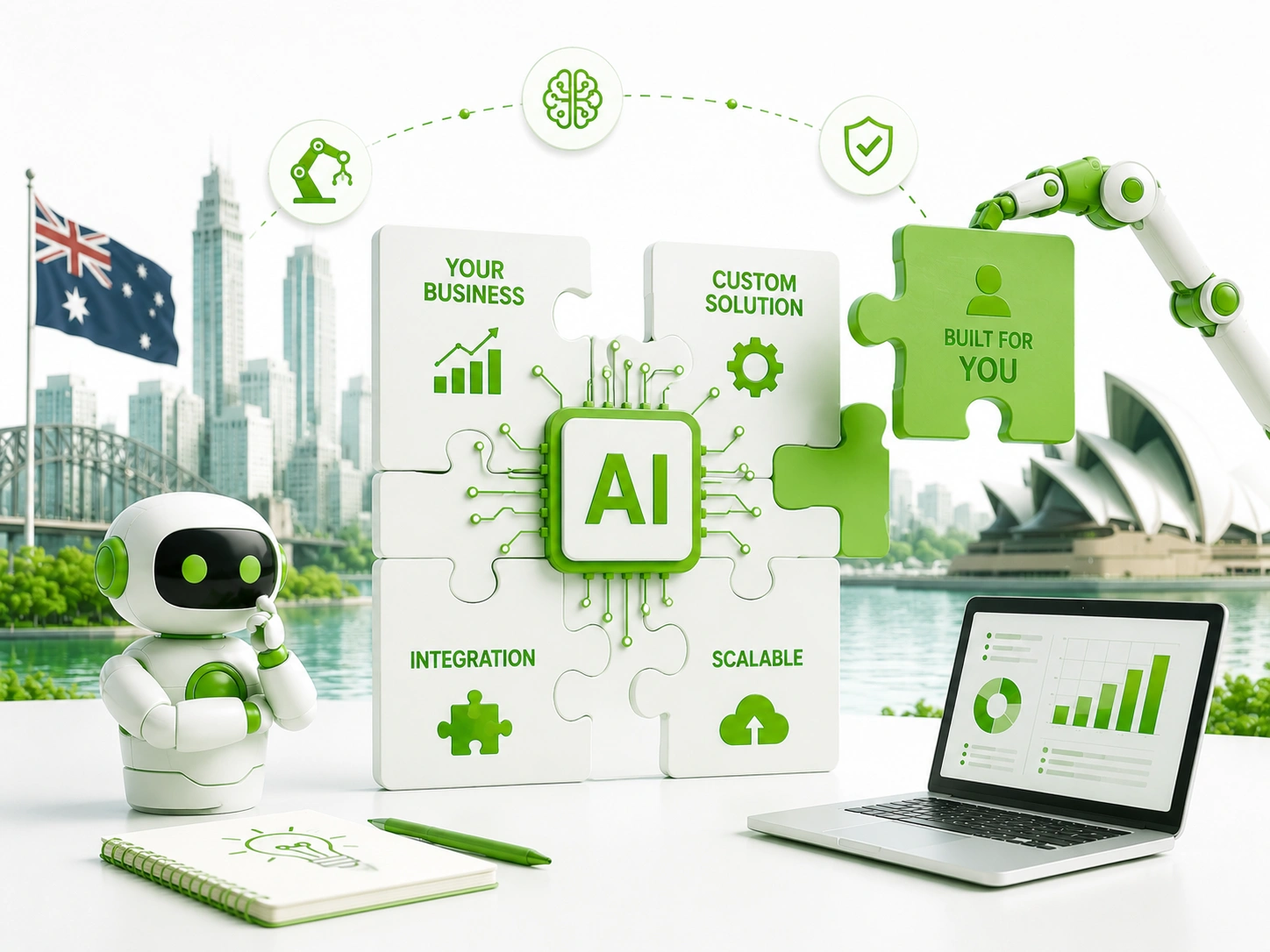
Custom AI Solutions Australia: When Off-the-Shelf Tools Are Not Enough
There’s a moment almost every growing Australian business eventually hits: the off-the-shelf AI tool that worked perfectly at 20 staff starts buckling at 80. Workflows that don’t fit the platform’s rigid templates get forced into awkward workarounds. Integrations break the moment your tech stack gets more complex than the vendor anticipated. And the support team, when you finally reach them, tells you the feature you need “isn’t on the roadmap.”
That moment is exactly when businesses start searching for custom AI solutions Australia companies can actually deliver — not because off-the-shelf software is bad, but because it was built for the average use case, and your business stopped being average a while ago. A custom solution is built around how your business actually operates, not the other way around.
At Digitechzo, we’ve sat in exactly this conversation with Australian businesses who’d outgrown their SaaS stack — paying for three different tools that didn’t talk to each other properly, or forcing a unique operational process into a template that was never designed for it. This guide breaks down exactly when custom AI development makes sense over an off-the-shelf product, what it actually costs, how the build process works, and the questions to ask before committing to a custom build versus configuring something that already exists.
Quick Answer
“Custom AI solutions are worth the investment when your business has a unique process, proprietary data, or scale that off-the-shelf software can’t accommodate without expensive workarounds. In Australia, custom AI development typically costs $15,000–$150,000+ depending on scope, takes 8–26 weeks to build, and makes the most sense once the ongoing cost and limitations of forcing multiple SaaS tools together exceed the cost of building something purpose-fit.”
What Are Custom AI Solutions, Exactly?
Custom AI solutions are software systems built specifically around a business’s own processes, data, and goals, rather than configured from a pre-built template designed for a broad market. This can mean a bespoke application built from scratch, or it can mean an off-the-shelf foundation (like an open-source LLM or a cloud AI platform) extensively customised and integrated to behave like a purpose-built system.
Custom Doesn’t Always Mean Built From Scratch
A common misconception is that “custom” means starting with a blank page. In practice, most custom AI projects combine existing AI infrastructure — large language models, cloud AI services, established frameworks — with bespoke logic, data pipelines, and interfaces layered around them. The customisation lives in how the pieces are connected to your specific business, not necessarily in building the underlying AI model itself.
Off-the-Shelf AI Tools vs Custom AI Solutions: A Practical Comparison
Before deciding which path fits, it helps to see the trade-offs laid out honestly rather than through a vendor’s sales pitch.
| Factor | Off-the-Shelf Tools | Custom AI Solutions |
| Upfront cost | Low (subscription-based) | Higher (project-based investment) |
| Time to launch | Days to weeks | 8–26 weeks depending on scope |
| Fit to your exact process | Approximate, often needs workarounds | Built around your actual workflow |
| Scalability with complexity | Hits limits as needs grow | Designed to scale with your business |
| Ongoing cost as you grow | Per-seat or per-usage fees compound | Higher upfront, lower marginal cost at scale |
| Data ownership and control | Often limited by vendor terms | Full control over data and architecture |
| Integration with proprietary systems | Limited to vendor’s supported integrations | Built to integrate with anything |
| Dependency risk | Vendor pricing or feature changes affect you directly | You control the roadmap |
The Honest Takeaway
Off-the-shelf tools remain the right choice for the majority of businesses, particularly those with standard processes and modest scale — there’s no need to custom-build what a $50-a-month tool already does well. Custom AI becomes the better economic decision specifically when off-the-shelf limitations start costing more in workarounds, lost efficiency, or missed opportunities than a purpose-built system would cost to create.
When Off-the-Shelf Tools Genuinely Aren’t Enough
There are recognisable signals that a business has outgrown configurable software, rather than simply needing to configure it better.
Signal 1: Your Process Doesn’t Fit Any Template
If your business has a genuinely unique workflow — a proprietary scoring methodology, a multi-step approval chain specific to your industry, or a process that evolved around a competitive advantage — forcing it into a generic SaaS template usually means losing the very thing that made the process valuable in the first place.
Signal 2: You’re Stitching Together Multiple Tools With Fragile Workarounds
When a business runs three or four different platforms connected by brittle no-code automations just to replicate one coherent workflow, that complexity itself becomes a liability — every tool update risks breaking the chain, and no single person fully understands the whole system.
Signal 3: Your Data Is Proprietary and Strategically Valuable
Businesses sitting on unique, high-value data — years of customer interactions, specialised industry data, or proprietary research — often find that generic AI tools can’t be trained on that data in a way that creates real competitive advantage. A custom solution can be built specifically to leverage that asset.
Signal 4: Compliance or Security Requirements Exceed What Vendors Offer
Industries with strict regulatory requirements — healthcare, financial services, government contracting — sometimes need data handling, audit trails, or security architecture that off-the-shelf vendors simply don’t provide at the level required.
Signal 5: You’re Paying for Scale You Don’t Use, or Hitting Limits You Do
Per-seat or per-usage pricing models that worked at small scale can become disproportionately expensive as a business grows, while usage caps and rate limits on AI platforms can directly constrain operations at a certain volume — both signs that a custom-built, predictably costed system may now make more financial sense.
What Does Custom AI Development Cost in Australia?
Cost depends heavily on scope, but understanding the cost drivers helps you evaluate any quote you receive.
| Project Type | Typical Cost Range (AUD) | Typical Timeline |
| Custom AI chatbot/assistant with integrations | $15,000 – $50,000 | 8–14 weeks |
| Custom workflow/process automation system | $20,000 – $70,000 | 10–18 weeks |
| Custom predictive analytics or scoring model | $25,000 – $90,000 | 12–20 weeks |
| Enterprise-grade multi-system AI platform | $80,000 – $250,000+ | 20–26+ weeks |
What Actually Drives the Cost
- Data readiness — businesses with clean, structured, accessible data pay significantly less than those needing extensive data cleaning and consolidation before any AI work can begin.
- Integration complexity — connecting to legacy systems, proprietary databases, or multiple third-party platforms adds meaningful development and testing time.
- Model choice — using an established LLM via API is far less expensive than training a model from scratch, which is rarely necessary or advisable for most business use cases.
- Compliance requirements — projects requiring specific data residency, audit logging, or security certification carry additional build and review time.
- Ongoing model and hosting costs — beyond the build fee, custom AI systems typically carry usage-based API costs and hosting fees that scale with activity.
How the Custom AI Development Process Actually Works
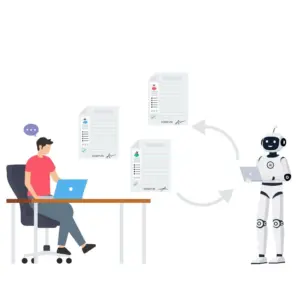
- Discovery and feasibility — a proper development partner assesses whether your problem actually needs a custom build, or whether a configured off-the-shelf tool would solve it more cheaply — a good partner will tell you if you don’t need them.
- Data audit — reviewing what data exists, its quality, and what needs to be cleaned or structured before development begins.
- Architecture and design — defining how the system will be built, which AI models or services it will use, and how it integrates with your existing tech stack.
- Build in stages — developing the system in testable increments rather than one large release, allowing course correction before too much is built on a wrong assumption.
- Testing, including adversarial testing — validating the system against expected use cases and deliberately unusual or edge-case inputs before it touches live data or customers.
- Deployment and handover — launching with proper documentation and training so your team can operate and maintain the system, not just use it.
- Ongoing support and iteration — custom systems typically need a support arrangement for updates, monitoring, and refinement as your business and data evolve.
Build In-House vs Hire a Development Partner: Pros and Cons
Building With an In-House Team
- Pros: complete control, knowledge stays internal, easier long-term iteration without external dependency
- Cons: requires hiring or developing genuine AI/ML expertise, which is costly, competitive, and slow to build from scratch
Hiring a Custom AI Development Partner
- Pros: brings cross-industry experience, established development frameworks, and faster time to a working system without a permanent hiring commitment
- Cons: requires careful selection — quality and approach vary significantly between providers, and you’re dependent on their availability for future changes
Most Australian businesses without an existing engineering team find a development partner the more practical path, provided the partner is selected for genuine technical depth and a track record of honest scoping, not just sales polish.
What to Look for in a Custom AI Development Partner
- Evidence of real, comparable past projects — ask to see examples relevant to your industry or use case, not just a generic portfolio.
- Willingness to recommend against a custom build — a trustworthy partner will tell you when an off-the-shelf tool genuinely solves your problem more cost-effectively.
- Clear data ownership terms — confirm in writing that you own the resulting system, code, and data — not just a licence to use it.
- Transparent architecture decisions — a good partner explains which AI models or services they’re using and why, rather than treating the build as a black box.
- A realistic maintenance plan — custom systems need ongoing care; ask exactly what support looks like after launch and what it costs.
Industries in Australia Where Custom AI Solutions Make the Most Sense
- Financial services — proprietary risk scoring, fraud detection, and compliance-driven systems that off-the-shelf tools can’t fully accommodate.
- Healthcare and medical technology — clinical workflow tools and patient management systems with strict data handling and integration requirements.
- Logistics and supply chain — route optimisation, demand forecasting, and inventory systems built around a company’s specific network and supplier relationships.
- Legal and professional services — document review and matter management tools trained on a firm’s own precedent and case data.
- Manufacturing — predictive maintenance and quality control systems built around proprietary equipment data and production processes.
Common Mistakes Businesses Make With Custom AI Projects
- Going custom before exhausting off-the-shelf options — many problems that feel unique are actually well-served by existing tools configured properly; custom development should be the second choice, not the first.
- Underestimating data preparation work — businesses consistently underestimate how much time cleaning and structuring data takes before any AI development can meaningfully begin.
- Skipping a feasibility phase — committing to a full build before validating that the approach will actually work risks a large, expensive investment built on an untested assumption.
- No clear ownership of the build after launch — if the development partner disappears and no internal team understands the system, maintenance and updates become a serious liability.
- Ignoring compliance from the start — retrofitting privacy, security, or audit requirements after a custom system is built is far more expensive than designing them in from day one.
Expert Tips for a Successful Custom AI Project
- Start with a feasibility study, not a full commitment — a smaller, paid discovery phase validates the approach before you commit to the full build cost.
- Insist on staged delivery — a system built and reviewed in increments catches misaligned assumptions early, when they’re cheap to fix.
- Document everything as you go — internal documentation of how the system works, not just user instructions, protects you if your development partner relationship ever ends.
- Budget 15–20% of build cost annually for maintenance — custom systems need updates as your business, data, and the underlying AI models evolve; budgeting for this upfront avoids unpleasant surprises.
- Pilot with real users early — internal feedback from the people who’ll actually use the system daily catches usability issues a technical team alone might miss.
Frequently Asked Questions
How much do custom AI solutions cost in Australia?
Costs typically range from around $15,000 for a focused custom chatbot or workflow tool to $250,000 or more for an enterprise-grade, multi-system AI platform. Most mid-sized Australian businesses building a single, well-scoped custom solution land in the $20,000–$80,000 range, plus ongoing hosting and model usage costs.
How do I know if I need a custom AI solution instead of off-the-shelf software?
A custom solution is usually justified when your process can’t fit a standard template without losing what makes it valuable, when you’re stitching together multiple fragile tools to replicate one workflow, or when off-the-shelf usage limits and per-seat pricing are becoming disproportionately expensive as you scale.
How long does it take to build a custom AI solution?
A focused custom AI project, such as a chatbot or workflow tool with a handful of integrations, typically takes eight to fourteen weeks. Larger, multi-system platforms with complex data and compliance requirements can take twenty weeks or more, including testing and a monitored launch period.
Is custom AI development worth it for a small or mid-sized business?
It can be, but it isn’t the right starting point for most. Custom development makes the most financial sense once the ongoing cost or limitation of off-the-shelf tools — in lost efficiency, fragile workarounds, or scaling fees — clearly exceeds the cost of building something purpose-fit, which is more often true for businesses with unique processes or proprietary data than for those with standard operational needs.
Who owns the AI system once it’s built?
This depends entirely on the contract terms agreed with your development partner. Reputable providers typically transfer full ownership of the resulting code, system, and data to the client, but this should always be confirmed explicitly in writing before a project begins, since terms vary significantly between providers.
Conclusion: Custom Is a Decision, Not a Default
The right answer for most businesses, most of the time, is still an off-the-shelf tool configured well. Custom AI solutions earn their cost specifically when your process, data, or scale has outgrown what a generic platform can reasonably accommodate — and recognising that moment accurately, rather than guessing, is what separates a worthwhile investment from an expensive overreach.
If you’re weighing up whether your business has genuinely outgrown off-the-shelf tools, Digitechzo offers a practical feasibility assessment before any custom build begins — we’ll tell you honestly whether a configured existing tool would solve your problem, or whether a custom solution is the smarter long-term investment. Get in touch to start with clarity, not a sales pitch.
About The Author