
Scroll through any brand’s social feed and you can usually tell within ten seconds whether someone is actually running a strategy — or just filling a calendar. Random product photos. Generic quote graphics. Captions that ask “What do you think?” to an audience that never answers. It looks like effort. It generates almost nothing.
The businesses actually winning on social aren’t posting more. They’re doing social media content creation differently — building content around specific audience problems, testing formats deliberately, and treating engagement as a means to leads, not an end in itself. That distinction is the entire difference between a feed that grows a business and a feed that just exists.
This guide walks through the strategies, frameworks, and platform-specific tactics that actually move the needle — not the generic “post consistently and be authentic” advice that dominates most search results.
This guide comes from the team at Digitechzo, a content and social media marketing agency that builds organic content systems for growing brands. We’ve kept this tactical and specific, based on what actually works across the accounts we manage.
Quick Answer
Effective social media content creation starts with a documented content pillar strategy tied to specific audience problems, uses platform-native formats (not repurposed ads), and prioritizes engagement that indicates buying intent — saves, shares, and comments — over raw likes. Consistency and format testing over 60–90 days matter more than any single “viral” post.
What Social Media Content Creation Actually Means
Social media content creation is the process of planning, producing, and publishing content specifically designed for how people behave on social platforms — not repurposed website copy, not recycled ads, and not generic stock-photo posts.
Good social content creation has three layers that most businesses skip past:
- Strategy – who you’re talking to, what problem each piece of content solves, and what action you want them to take
- Format-native production – content built for how a specific platform’s algorithm and audience actually consume information (a LinkedIn carousel isn’t a repurposed Instagram Reel script)
- Distribution and engagement management – posting timing, hashtag/keyword strategy, and actually responding to comments and DMs, which most brands ignore entirely
The biggest gap between brands that grow on social and brands that stall isn’t creativity — it’s that growing brands treat social content as a system with inputs and outputs, while stalled brands treat it as a content backlog to clear.
Why Most Social Content Fails to Generate Leads
A few uncomfortable truths, backed by consistent patterns across social platforms:
- Algorithms across nearly every major platform now prioritize content that keeps people on the platform longer — meaning content that drives external clicks (like “link in bio”) is often deliberately shown to fewer people. Brands that don’t understand this keep posting link-heavy content and wonder why reach keeps dropping.
- Comments, saves, and shares are consistently weighted more heavily than likes by ranking algorithms because they signal deeper engagement — yet most brands still optimize captions purely for likes.
- Short-form video has seen dramatically faster growth in watch time than any other content format over the past several years, but many B2B brands still avoid video entirely, ceding an enormous reach advantage to competitors willing to be less polished on camera.
In our own client work, we’ve consistently seen accounts hit a growth ceiling not because of poor creative, but because of an all-promotion content mix. Accounts that shift to a roughly 80/20 split — value-driven or entertaining content versus direct promotion — almost always see engagement and follower quality improve within a few weeks, because the algorithm rewards content people actually want to interact with, not content that asks for something.
Reach vs. Engagement vs. Conversion — Know the Difference
Businesses often conflate three separate goals:
| Metric | What It Measures | What Drives It |
|---|---|---|
| Reach | How many people saw it | Format, timing, algorithm favor, shareability |
| Engagement | How many people interacted | Relevance, emotional or practical value, clear CTA |
| Conversion | How many took a business action | Trust built over time, clear next step, right offer |
Optimizing purely for reach without a conversion path is why viral posts often generate zero leads — the content and the offer were never connected.
The Content Pillar Framework
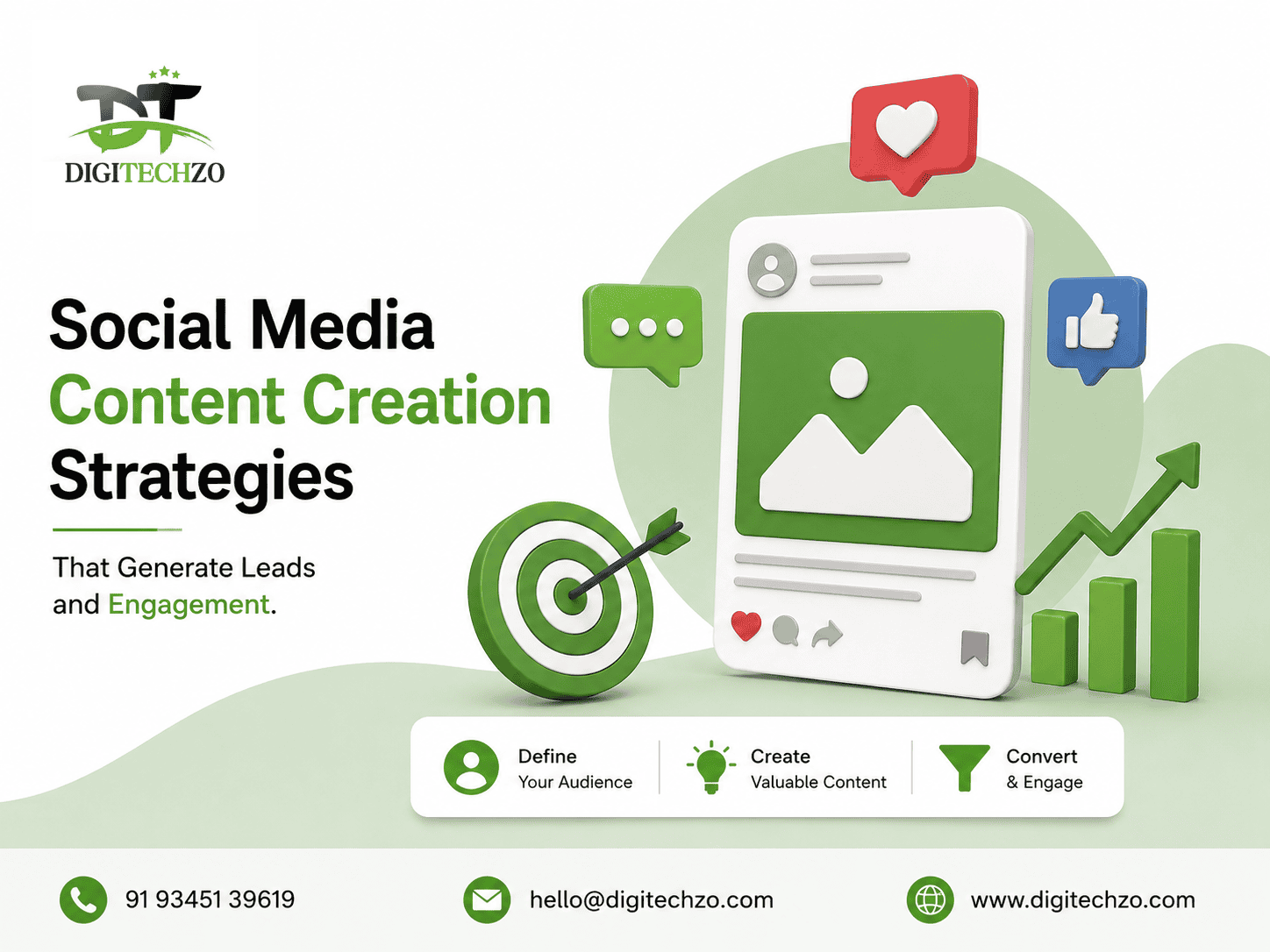
Instead of brainstorming random post ideas weekly, build 4–6 content pillars tied directly to your audience’s actual questions and objections. A typical framework:
- Educational – how-to content solving a specific audience problem
- Authority/POV – opinions or frameworks that differentiate your perspective
- Social proof – case studies, testimonials, results, behind-the-scenes wins
- Relatable/entertaining – lighter content that humanizes the brand
- Product/offer – direct promotion, kept intentionally to a minority share
- Community/engagement – questions, polls, and content designed purely to spark conversation
Example in practice: A B2B SaaS client we worked with was posting almost entirely product screenshots and feature announcements. After shifting to an 80/20 pillar mix — with educational carousels breaking down customer pain points and POV posts from the founder — comment volume and qualified profile visits both increased meaningfully within the first month, without any change in posting frequency.
How Many Pillars Should You Actually Use?
Fewer than four and content gets repetitive fast. More than six and consistency becomes hard to maintain, especially for lean teams. Four to six pillars, rotated weekly, is the sweet spot for most small-to-mid-size teams.
Platform-Specific Strategies
Best for B2B lead generation and executive visibility. Native documents (carousels), text posts with a strong first line, and founder/employee personal posts consistently outperform company-page posts in reach. Avoid external links in the main post; put them in the first comment instead.
Best for brand personality, community, and visual products. Reels currently drive the majority of new reach; carousels drive saves and shares, which strongly signal algorithmic favor. Stories are underused for direct engagement — polls and question stickers often outperform feed posts for genuine two-way interaction.
TikTok
Best for top-of-funnel reach and younger or trend-savvy audiences. Rewards authenticity over polish; a raw, well-hooked video frequently outperforms a heavily produced one. The first two seconds determine most of the video’s fate — invest disproportionate effort there.
X (Twitter)
Best for real-time commentary, thought leadership, and community building around a niche. Threads still perform well for depth; short, opinionated single posts drive the fastest engagement.
YouTube (including Shorts)
Best for long-term compounding reach — search-driven discovery means older videos keep generating views, unlike short-form content that has a short shelf life on other platforms. Shorts can feed the long-form funnel by driving subscribers who then watch deeper content.
Content Formats Ranked by Engagement and Effort
| Format | Typical Engagement | Production Effort | Best Use Case |
|---|---|---|---|
| Short-form video (Reels/Shorts/TikTok) | High | Medium | Top-of-funnel reach, brand personality |
| Carousels/native documents | High (especially saves) | Medium | Education, frameworks, listicles |
| Text-only posts with strong hooks | Medium-High | Low | Thought leadership, quick wins |
| Static image posts | Medium | Low-Medium | Announcements, quotes, social proof |
| Long-form video | Medium (but high depth) | High | Authority building, SEO on YouTube |
| Polls/interactive stickers | High (but shallow) | Low | Community engagement, audience research |
Pros & Cons of prioritizing video-first strategy:
| Pros | Cons |
|---|---|
| Highest reach potential on most platforms currently | Higher production time and skill requirement |
| Builds stronger trust and personality connection | Harder to repurpose into other formats quickly |
| Favored disproportionately by current algorithms | Requires more testing to find what resonates |
Building a Content Calendar That Actually Converts
A calendar without strategy is just a scheduling tool. Build yours around these layers:
- Map pillars to weekly slots – e.g., 2 educational, 1 authority, 1 social proof, 1 promotional per week
- Batch production, not publishing – film or write a week or two of content in one sitting to protect consistency during busy weeks
- Build a CTA ladder – not every post should ask for a sale; alternate between “follow,” “comment,” “save,” and occasionally “click/DM”
- Leave room for reactive content – 10–20% of the calendar should stay flexible for trending topics or real-time commentary
How to Turn Engagement Into Leads
This is the step most “social media tips” content skips entirely:
- Reply to every comment with a real answer, not just an emoji — comments are often warmer leads than cold outreach because the person already engaged voluntarily
- Use content-specific CTAs – “Comment ‘GUIDE’ and I’ll send it over” converts better than a generic bio link because it creates a direct, personal touchpoint
- Track DMs as a pipeline stage, not just an inbox to clear — many B2B deals now start as a social comment or DM before ever reaching a sales call
- Follow up warm engagers manually – if someone comments thoughtfully or saves multiple posts, that’s a stronger buying signal than most cold lead lists
Common Mistakes Businesses Make
- Posting without a content pillar strategy, resulting in a disconnected mix that doesn’t build a coherent brand impression over time.
- Over-indexing on promotional content, which algorithms and audiences both push back against with declining reach and engagement.
- Ignoring comments and DMs, treating social as one-way broadcasting instead of the two-way channel it actually is.
- Repurposing ads as organic content, which reads as inauthentic and typically underperforms native-feeling content.
- Chasing virality instead of relevance, producing trend-jacked content disconnected from the brand’s actual expertise or offer.
- Giving up after 30 days, before the algorithm and audience have had time to learn what the account is about — most meaningful growth compounds after 60–90 days of consistency.
Expert Tips for Better Results
- Hook in the first line or first two seconds — always. Whatever the format, the opening is what determines whether the rest gets consumed at all.
- Repurpose one core idea across formats, not one post across platforms unchanged. A single insight can become a LinkedIn text post, an Instagram carousel, and a short video — each written natively for its platform.
- Study your own analytics monthly, not competitors’ follower counts. Your saves, shares, and comment quality tell you far more about what to make next than any general “best practices” list.
- Give employees or founders a voice, not just the brand account — personal profiles consistently outperform company pages in reach and trust for B2B in particular.
- Set content goals by funnel stage, not just overall engagement — track top-of-funnel reach separately from mid-funnel engagement and bottom-funnel DMs/leads so you know exactly where the system needs improvement.
FAQs
What is social media content creation?
Social media content creation is the strategic planning and production of platform-native content — video, carousels, text posts, and graphics — designed around specific audience problems and calibrated to how each platform’s algorithm and audience actually behave, rather than generic or repurposed content.
How often should a business post on social media?
Consistency matters more than frequency — most brands see solid results posting 3–5 times per week per platform, provided the content follows a clear pillar strategy. Sporadic high-volume bursts followed by silence tend to underperform steady, moderate posting.
What type of social media content generates the most engagement?
Short-form video and native carousels/documents currently generate the highest engagement across most platforms, particularly when they lead with a strong hook and deliver clear, specific value rather than generic tips.
How do you turn social media engagement into actual leads?
Convert engagement into leads by replying personally to comments and DMs, using specific CTAs that invite a direct response (like commenting a keyword for a resource), and treating warm engagers as a manual follow-up pipeline rather than passive metrics.
Should businesses focus on one platform or multiple?
Most businesses get better results focusing deeply on one or two platforms where their audience is most active before expanding, since split attention across five platforms usually produces mediocre content everywhere rather than strong content anywhere.
Final Thoughts
Social media content creation that actually generates leads isn’t about posting more or chasing virality — it’s about building a deliberate pillar strategy, producing platform-native formats, and treating engagement as the first step of a conversion pipeline rather than the finish line. The brands winning right now are the ones treating their social presence as a system, not a scramble.
If you want a documented content strategy built around your specific audience and offer instead of another generic posting calendar, the team at Digitechzo offers a free social content audit to show you exactly what’s working, what isn’t, and where the fastest wins are — no obligation either way.
About The Author