

It’s 7:45 AM. Before a property manager has finished their coffee, there are already twelve unread maintenance emails, three tenants asking about rent extensions, and a vacant unit that’s been sitting empty for eleven days longer than it should have. By the time the day officially starts, the day is already behind.
This is the daily reality for most property managers — not because they’re bad at their jobs, but because the volume of small, repetitive decisions has outgrown what one person (or even a small team) can handle manually. This is exactly why AI software for property managers has moved from “nice to have” to operational necessity in the last few years.
At Digitechzo, we’ve watched property managers go from skeptical about AI to dependent on it within a single busy leasing season, simply because the alternative — doing everything manually — stops scaling somewhere around 40-50 units.
This article explains exactly why AI software for property managers matters right now, what it actually automates, how to tell genuine AI capability from marketing buzzwords, and how to start using it without disrupting your current operations.
Quick Answer
AI software for property managers automates the repetitive, time-sensitive tasks that consume most of a manager’s day — rent reminders, maintenance triage, tenant communication, and screening — freeing up time for the judgment calls only a human can make. Property managers who adopt it typically report faster response times, fewer missed follow-ups, and meaningfully lower administrative workload within the first few months.
The Real Problem: Why Manual Property Management Doesn’t Scale
The math behind property management is unforgiving. A manager handling 30 units might field 15-20 tenant messages a day, coordinate 5-10 maintenance requests a week, and review a handful of applications a month — manageable, if barely. Double that portfolio and the workload doesn’t just double; the coordination complexity multiplies, because more moving parts mean more things falling through the cracks.
This is precisely the gap AI software for property managers is built to close. It’s not about replacing judgment — it’s about removing the sheer repetitive volume that eats the hours a property manager should be spending on tenant relationships, vendor negotiations, and strategic decisions.
Why This Became Urgent Now, Not Five Years Ago
Three shifts converged recently:
- Tenant expectations changed. Renters who order groceries and get instant customer service elsewhere expect similarly fast responses from property management.
- Labor costs rose faster than rent growth in many markets, making headcount-based scaling less financially viable.
- AI models matured enough to handle nuanced tasks like maintenance triage and tenant communication reliably, not just basic rule-based automation.
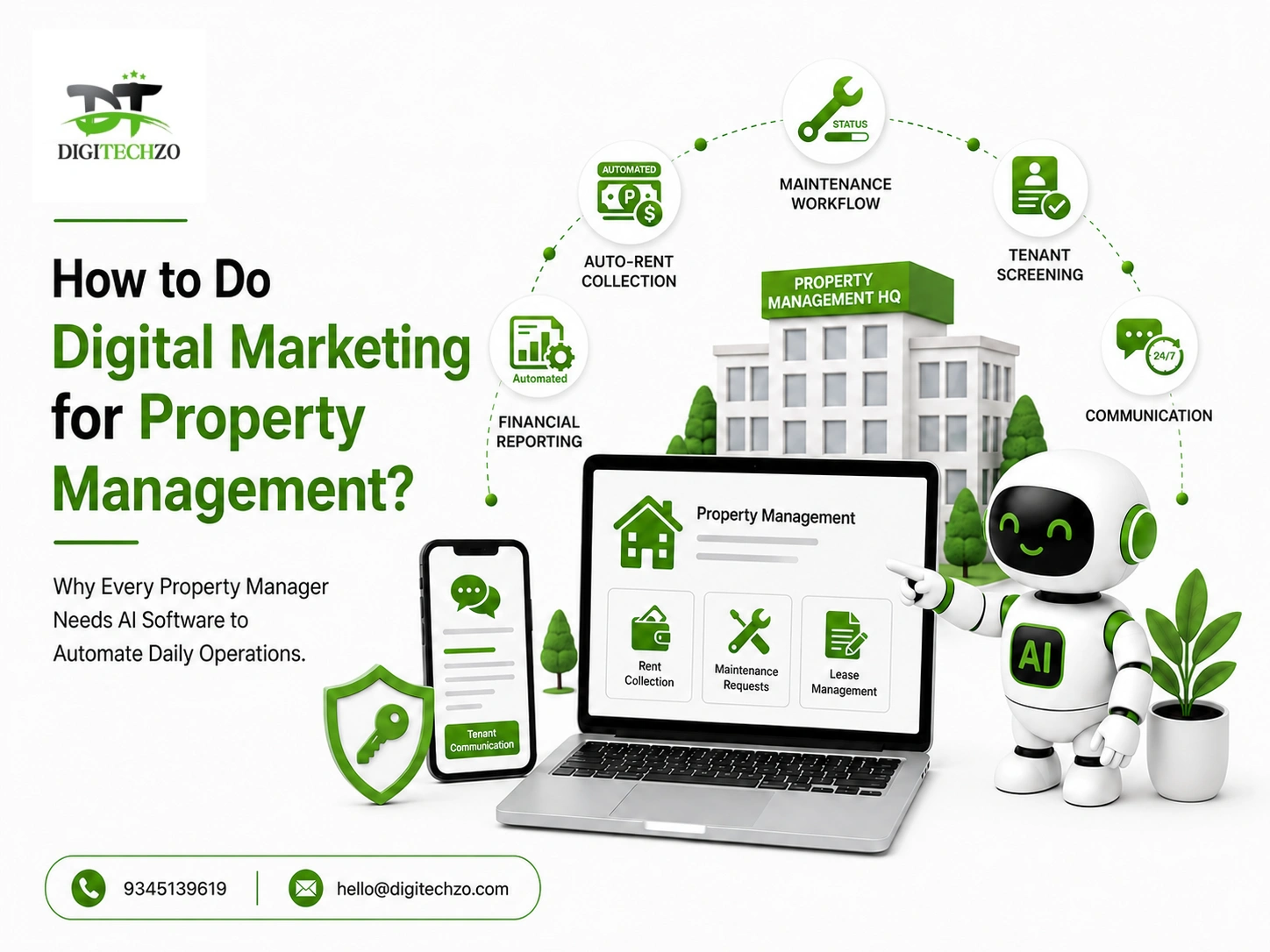
What AI Software for Property Managers Actually Automates
1. Maintenance Triage and Vendor Dispatch
Instead of a human reading every maintenance request and deciding urgency, AI software for property managers can classify requests instantly — a leaking faucet gets routed differently than a fire alarm going off — and dispatch the right vendor automatically based on availability and specialty.
2. Rent Reminders and Delinquency Prevention
Rather than sending the same generic reminder to every tenant, AI software identifies which tenants are statistically likely to pay late based on historical patterns and sends personalized, earlier nudges specifically to that group.
3. Tenant Communication at Scale
A conversational AI layer can answer common questions — lease terms, pet policies, parking rules — instantly, 24/7, escalating only genuine exceptions to a human property manager.
4. Applicant Screening and Risk Scoring
AI software for property managers can process applications faster than manual review while also catching inconsistencies (like mismatched income documentation) that busy humans sometimes miss under time pressure.
5. Reporting and Anomaly Detection
Instead of manually reviewing every line of a financial report, AI flags anomalies automatically — an unusually high vendor invoice, a rent payment pattern that’s shifted — so managers investigate exceptions instead of reading everything line by line.
Key Benefits Beyond Time Savings
Time savings gets most of the attention, but property managers who’ve actually implemented AI software report benefits that go further:
- Fewer missed follow-ups. Automated systems don’t forget to check back on a maintenance ticket the way a busy human occasionally does.
- More consistent tenant experience. Every tenant gets the same quality of response regardless of how busy the office is that day.
- Better data for decision-making. AI software for property managers generates structured data from every interaction, which compounds into genuinely useful trend insights over time.
- Reduced burnout. Removing repetitive cognitive load from property managers directly reduces the exhaustion that drives high turnover in this profession.
AI Software vs. Manual Processes (Comparison)
| Task | Manual Process | AI Software for Property Managers |
|---|---|---|
| Maintenance request triage | Manager reads and prioritizes each one | Instant classification and vendor routing |
| Rent reminders | Generic reminder to all tenants | Personalized, risk-based timing |
| Tenant questions | Answered during business hours only | Answered 24/7 via conversational AI |
| Applicant screening | Manual document review | AI-assisted risk scoring and fraud detection |
| Financial review | Full manual line-item review | Automated anomaly flagging |
Pros and Cons of Adopting AI Software
Pros:
- Frees significant time from repetitive daily tasks
- Improves tenant response consistency and speed
- Scales operations without proportional headcount growth
- Surfaces patterns in data that manual review typically misses
Cons:
- Requires upfront setup and data migration effort
- Some features need a data history to become genuinely accurate (early predictions are less reliable)
- Over-reliance without human oversight risks compliance issues in screening decisions
- Team adoption takes deliberate training, not just software installation
How to Start Using AI Software Without Disrupting Operations
- Pick one high-friction task first — usually maintenance triage or rent reminders — rather than automating everything simultaneously.
- Run it in parallel with your current process for the first few weeks to compare AI-suggested actions against your team’s manual decisions.
- Set clear escalation rules so the AI knows exactly when to hand a conversation or decision to a human.
- Review outcomes weekly during rollout, adjusting thresholds (like what counts as “urgent” maintenance) based on real results.
- Expand module by module once the first automation is trusted and stable, rather than a single big-bang rollout across every function.
Real-World Scenarios
Scenario 1 — Solo property manager, 45 units: A single manager implemented AI software for property managers specifically for after-hours tenant messaging and reported that maintenance emergencies got triaged correctly overnight instead of waiting until the next business day, reducing water damage claims from delayed pipe repairs.
Scenario 2 — Small team, 180 units: A three-person team automated rent reminders based on AI delinquency prediction and noticed late payments dropped because at-risk tenants received earlier, more personalized outreach instead of a single generic reminder sent to everyone on the same day.
Scenario 3 — Growing company, 60 to 150 units in one year: Rather than hiring two additional staff members to handle the growth, a property management company implemented AI-assisted applicant screening and maintenance dispatch, absorbing the increased workload with the existing team.
Common Mistakes Property Managers Make With AI Software
- Automating everything on day one, overwhelming both the system and the team before trust in the AI’s accuracy has been established.
- Removing human oversight from screening decisions entirely, which creates real fair housing compliance risk if AI scoring isn’t reviewed by a person.
- Choosing software based on the “AI” label alone, without verifying the specific tasks it actually automates versus what’s just marketing language.
- Ignoring the data history requirement. Predictive features like delinquency risk scoring need several months of data to become meaningfully accurate — expecting instant precision leads to disappointment.
- Failing to train tenants on new communication channels, resulting in low adoption of self-service portals or chatbots that could have reduced call volume significantly.
Expert Tips for Getting the Most Out of It
- Start with maintenance triage. It has the fastest, most visible ROI and builds internal confidence in the system before expanding to other functions.
- Keep a documented override log for any AI-flagged screening decision your team overrides manually — this protects you if a decision is ever questioned and helps refine the model.
- Set a monthly “AI accuracy review” comparing predicted outcomes (like late payment risk) against actual outcomes to catch drift early.
- Use chatbot transcripts as a training resource, reviewing common tenant questions monthly to identify recurring issues worth fixing at the source.
- Don’t skip the human escalation path. The best AI software for property managers is designed to hand off gracefully, not trap tenants in a loop with no way to reach a person.
Frequently Asked Questions
What does AI software for property managers actually do?
AI software for property managers automates repetitive daily tasks like maintenance triage, rent reminders, tenant communication, and applicant screening, using predictive models to prioritize and personalize actions rather than treating every task identically.
Is AI software for property managers only useful for large portfolios?
No — even solo property managers with 30-50 units benefit significantly, particularly from after-hours communication automation and maintenance triage, since manual capacity limits hit smaller teams just as hard proportionally.
Can AI software replace a property manager entirely?
No. It automates repetitive, data-driven tasks but still requires human judgment for tenant relationships, legal compliance, and exception handling that AI cannot reliably manage alone.
How accurate is AI software for property managers at predicting late rent payments?
Accuracy improves significantly with data history — most platforms need several months of payment data before predictions become reliably useful, so early results should be treated as directional rather than precise.
What’s the first task property managers should automate with AI software?
Maintenance request triage is typically the best starting point, since it has clear urgency categories, immediate time savings, and low compliance risk compared to functions like tenant screening.
Final Thoughts
The property managers thriving in 2026 aren’t the ones working longer hours — they’re the ones who’ve offloaded the repetitive, predictable parts of the job to AI software for property managers and reserved their own time for the judgment calls that actually require a human. This isn’t about replacing the role; it’s about making the role sustainable at the scale modern portfolios demand.
Start small, automate one genuinely painful task first, and expand as trust in the system builds. The property managers who wait until they’re already overwhelmed to make this shift end up implementing under pressure, which rarely goes as smoothly as a deliberate, phased rollout.
If you’re a property manager trying to figure out which AI software actually fits your daily operations — not just what a vendor’s demo promises — Digitechzo’s advisory team can walk through your current workload and recommend a realistic starting point. Reach out for a free operations assessment.
About The Author