
A patient searching for a new doctor today rarely starts with the phone book or even an insurance directory — they start with Google, and within seconds they’re comparing reviews, photos, and bios across five or six providers before ever booking. If your online presence looks like every other clinician’s stock-photo profile, you’ve already lost that comparison, regardless of how skilled you are in the exam room.
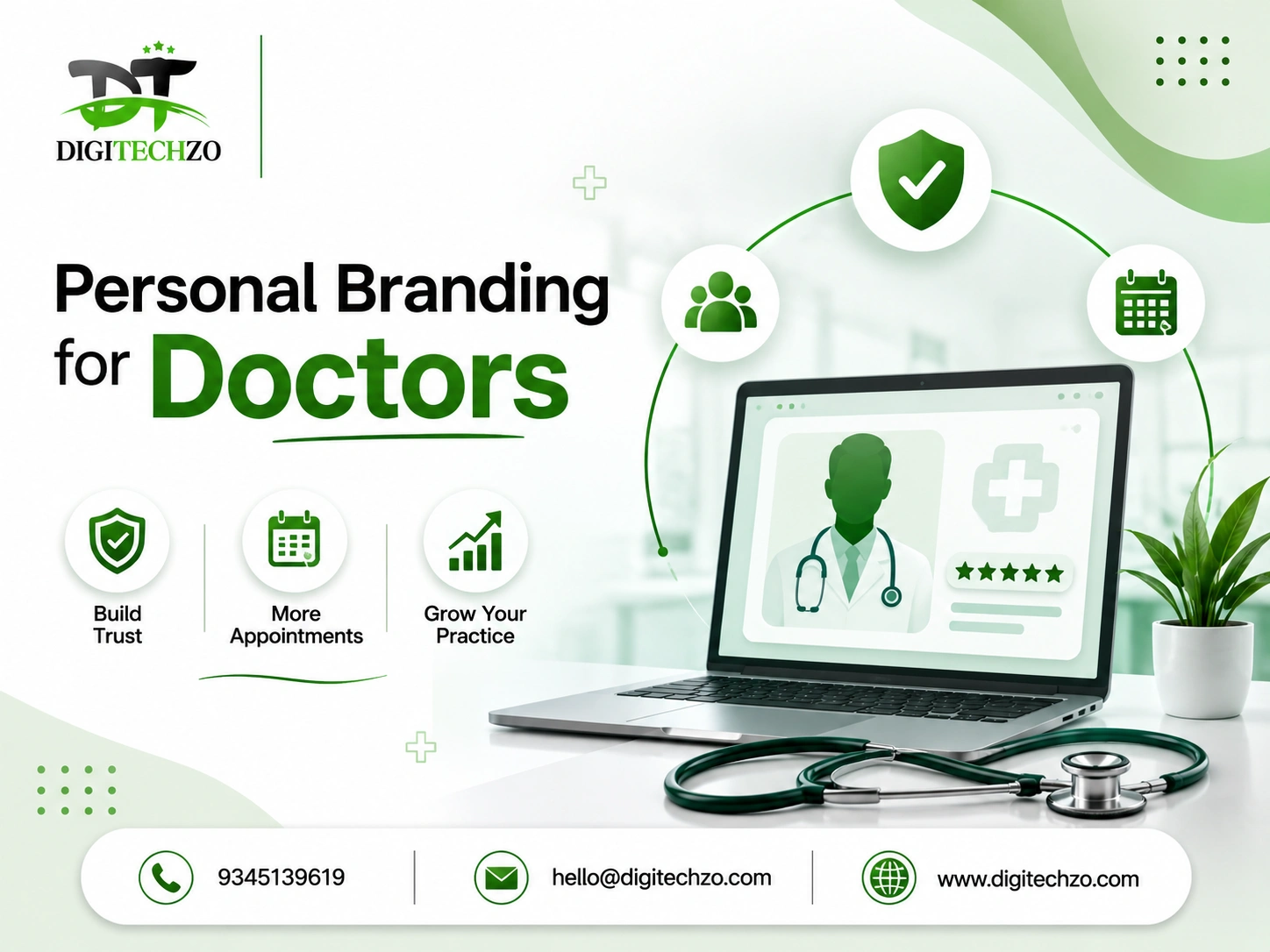
Personal branding for doctors is how physicians and specialists translate their clinical expertise into visible, searchable trust — so patients choose them with confidence before the first appointment, and referring providers think of them first for complex cases. This guide, put together with input from the team at DigiTechzo, a marketing partner that works with healthcare practices and independent physicians, covers exactly how to build that trust systematically, without compromising the professionalism medicine requires.
Quick Answer
Personal branding for doctors is the strategic process of establishing a consistent, credible, and visible professional identity — across your website, reviews, social presence, and community reputation — so patients and referring physicians recognize your expertise before direct contact. It combines clinical credibility signals (credentials, outcomes, patient education) with modern digital presence tactics (local SEO, content, reputation management) to increase appointment bookings and referral volume.
Why Doctors Can No Longer Ignore Personal Branding
Healthcare decisions carry more emotional weight than almost any other purchase decision, which makes trust the deciding factor — more than proximity or even insurance network in many cases. Research from health information behavior studies consistently shows the large majority of patients read online reviews before selecting a provider, and many will actively avoid a provider with no reviews or an outdated online presence, regardless of their actual qualifications.
Three forces have made physician branding unavoidable:
- Patients now vet doctors like they vet any other service provider — checking star ratings, bios, and even social media before booking.
- Telehealth and multi-location practices have widened patient choice, meaning proximity alone no longer guarantees loyalty.
- Referring physicians increasingly research specialists online before sending complex cases, especially in competitive metro markets.
A physician with a clear, well-documented brand doesn’t have to rely solely on network assignment or word-of-mouth — patients and referring providers arrive already primed to trust them.
The Core Pillars of a Trustworthy Medical Brand
Credential and Outcome Transparency
Board certifications, fellowship training, procedure volume, and patient outcomes — presented clearly, not buried in a PDF CV.
Patient-Centered Communication Style
The tone across your bio, videos, and content should mirror how you actually communicate with patients: clear, empathetic, and free of unnecessary jargon.
Visible Social Proof
Reviews, testimonials (with proper consent and compliance), and case studies that reflect real patient experience, not just star ratings in isolation.
Educational Authority
Content that answers the questions patients are already searching — condition explainers, procedure walkthroughs, recovery expectations — establishes expertise long before an appointment is booked.
Consistent Local Visibility
Being the recognized name for a specific condition, procedure, or patient population within your service area.
Building Your Brand Without Violating Medical Ethics or Compliance
This is the area most generic branding advice completely ignores — and where doctors need a different playbook than other professionals.
Know Your Boundaries
- Testimonials and patient stories require documented consent and must avoid implying guaranteed outcomes
- Avoid definitive claims (“cures,” “guaranteed results”) that conflict with advertising standards set by medical boards
- HIPAA considerations apply to any patient-related content, including photos, case discussions, and social proof
Work With Your Practice’s Compliance Officer or Legal Counsel
Before publishing any patient-facing content — especially before/after imagery or outcome statistics — have it reviewed against your specialty board’s advertising guidelines and applicable privacy regulations.
Use De-Identified, Educational Framing
Instead of “Patient X’s amazing recovery,” effective and compliant content focuses on general condition education: “What Recovery From [Procedure] Typically Looks Like” — informative without any individual patient exposure.
Content That Builds Authority (Without Sounding Like an Ad)
Content is where physicians build the deepest trust, because it demonstrates expertise in action rather than claiming it.
High-Trust Content Formats
| Content Type | Purpose | Patient Trust Impact |
|---|---|---|
| Condition/procedure explainers | Answer pre-appointment questions | High |
| “What to expect” guides | Reduce anxiety before visits/procedures | High |
| Provider Q&A videos | Humanize the physician | Medium-high |
| Patient education blog posts | Build long-term SEO authority | Medium |
| Community health talks/webinars | Establish local authority | Medium |
Pros and Cons of Common Channels for Physicians
Practice Website/Blog
- Pros: Owned asset, strong long-term SEO value, ideal for detailed condition education
- Cons: Requires consistent publishing to build authority
YouTube
- Pros: Excellent for procedure explainers and building deep trust through visual clarity
- Cons: Production effort is higher; needs compliance review before publishing
Instagram/Social
- Pros: Good for humanizing the physician and building community awareness
- Cons: Less suited for detailed clinical education; requires careful tone to stay professional
Example scenario: An orthopedic surgeon built a simple library of short “what to expect before and after [specific procedure]” videos rather than promotional content. Because the videos answered questions patients were already typing into Google before their consultations, that content became a significant source of new-patient bookings — patients arrived already familiar with the surgeon’s approach and communication style, which shortened the entire consultation-to-booking cycle.
Local SEO and Online Reputation for Physicians
Personal branding for doctors only compounds if patients can actually find it in local search results.
Core Local SEO Actions
- Fully optimize your Google Business Profile listing with specialty, accepted insurance, and photos
- Ensure consistent name, credentials, and location details across directories (Healthgrades, Zocdoc, Vitals, hospital system pages)
- Actively and ethically request patient reviews, in compliance with platform and medical board guidelines
- Publish condition-specific and procedure-specific pages rather than a single generic “About” page
- Respond to reviews professionally, including constructive or negative ones, without disclosing any protected health information
Featured Snippet Opportunity
Google often surfaces short, clear definitions for branding and healthcare marketing queries. Structuring key sections — like the Quick Answer above — as a direct 2–3 sentence definition improves the chance of capturing that snippet position for medical branding searches.
Personal Brand vs. Hospital/Practice Brand
Many physicians work under a hospital system or group practice brand, creating a natural tension similar to what independent professionals face elsewhere.
The most effective approach:
- Use the hospital or practice’s institutional credibility as a trust layer, not a substitute for your own visibility
- Maintain your own professional bio, headshot, and content consistency across every platform where you appear, even within a larger system’s website
- Where policy allows, maintain an independent professional social presence and content library that stays with you if you change institutions
Physicians who build recognizable personal authority retain that reputation and referral network even through practice or hospital transitions. Those who rely entirely on institutional branding often restart their visibility from zero after any move.
Common Mistakes Doctors Make With Personal Branding
- Using an outdated headshot and bio for years. Patients notice inconsistency between an online photo and the person they meet.
- Publishing overly technical content aimed at peers, not patients. Authority content should educate the patient, not showcase jargon.
- Ignoring reviews entirely. Silence on review platforms reads as disengagement, even when clinical care is excellent.
- Overpromising outcomes in marketing language. This risks both patient trust and regulatory compliance issues.
- Treating branding as the marketing team’s job alone. Patients respond to the physician’s own voice and presence, not just practice-level marketing.
- No clear next step for patients. Educational content without a visible path to booking wastes the trust it builds.
Expert Tips to Build Trust Faster
- Lead with patient questions, not procedures. Structure content around what patients actually type into search (“How long is recovery after knee replacement?”) rather than clinical terminology alone.
- Batch-record video content quarterly. Film several explainer videos in one compliant, controlled session rather than trying to produce content ad hoc.
- Make your credentials scannable, not buried. Board certifications and specialty training should be visible within seconds on your bio page.
- Coordinate with your compliance team early, not after content is already written — this prevents costly rewrites or takedowns.
- Track which content actually drives bookings, not just views — tag intake forms with “how did you hear about us” to connect content directly to new patients.
FAQs
What is personal branding for doctors?
It’s the process of building a consistent, credible, and visible professional identity — through your website, reviews, and content — so patients and referring providers recognize your expertise and choose you with confidence before their first appointment.
Is personal branding for doctors compliant with medical advertising rules?
Yes, when built correctly. It requires working within specialty board advertising guidelines, obtaining proper patient consent for any testimonials, and avoiding definitive outcome claims — compliance review should be part of the process, not an afterthought.
How does personal branding help increase patient appointments?
It builds trust before the first contact by answering common patient questions and demonstrating credibility through reviews, education content, and visible expertise — which shortens the decision-making process for prospective patients.
Should doctors handle personal branding themselves or hire help?
Many physicians handle content voice and patient interaction themselves while delegating SEO, website structure, and content production to a marketing partner familiar with healthcare compliance requirements.
How is personal branding different from hospital or practice marketing?
Practice marketing promotes the institution as a whole, while personal branding builds trust and recognition around an individual physician — a reputation that stays with the doctor even if they change practices or hospital affiliations.
Final Thoughts
In a healthcare landscape where patients research providers as carefully as any other major decision, personal branding for doctors isn’t optional positioning — it’s the trust infrastructure that determines whether patients choose you with confidence or keep comparing options. Physicians who build credential transparency, patient-centered content, and consistent local visibility see that trust translate directly into appointment bookings and stronger referral relationships.
If you’re ready to build a compliant, patient-focused personal brand that actually grows your appointment book, DigiTechzo works with physicians and practices to build exactly this kind of system — from website and local SEO to patient education content that respects both your time and your compliance obligations. Reach out to start mapping your branding strategy today.
About The Author