

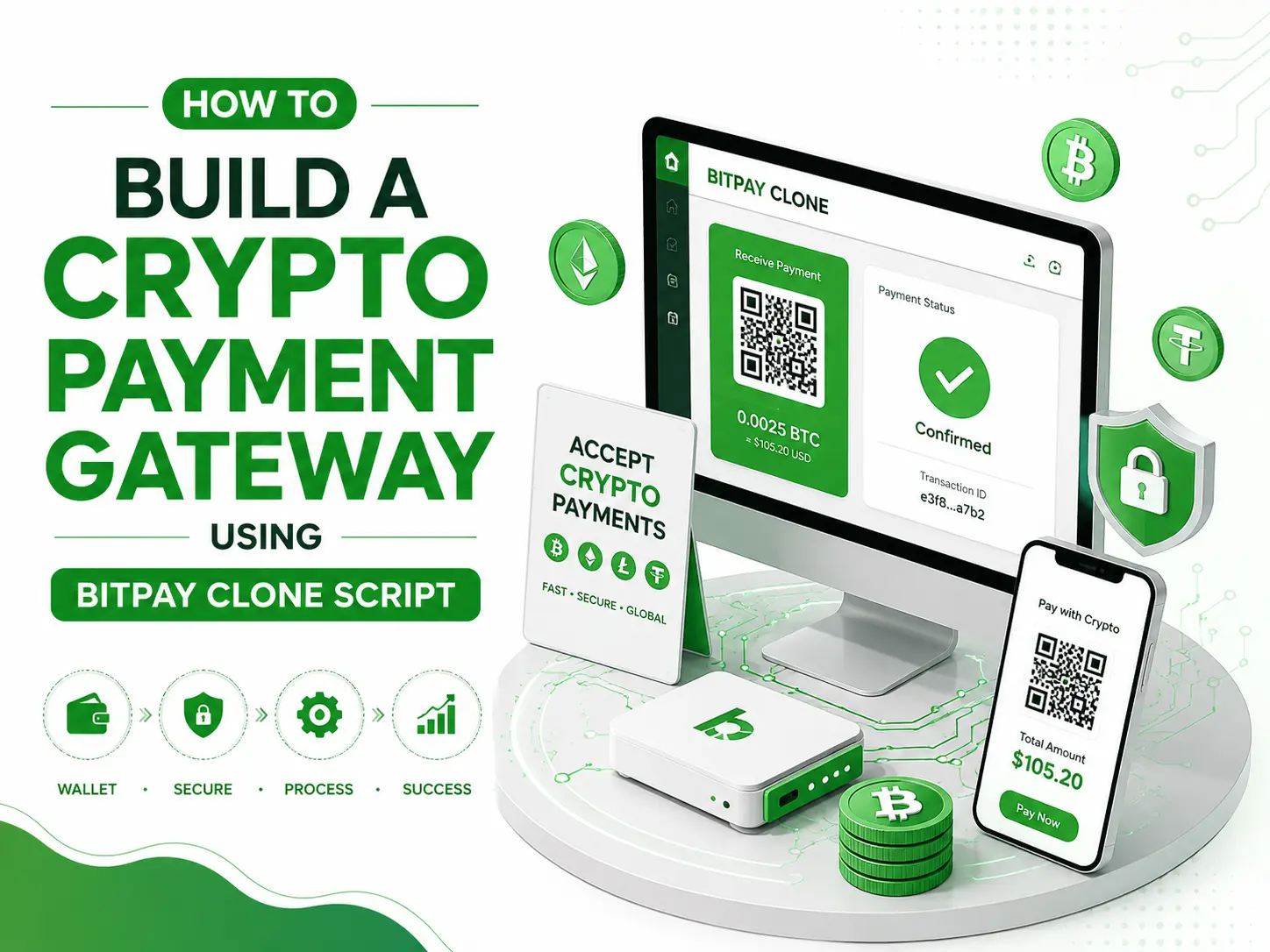
Every day, businesses lose potential customers because they can’t accept Bitcoin, Ethereum, or USDT. A shopper wants to pay in crypto, doesn’t see the option at checkout, and abandons the cart. Multiply that across thousands of transactions, and you’re looking at real revenue walking out the door.
Here’s the good news: you don’t need a six-figure development budget or an 18-month build cycle to fix this. If you’re wondering how to build crypto payment gateway, the fastest and most cost-efficient route in 2025 is using a BitPay clone script — a ready-made, customizable foundation that mirrors the core functionality of established platforms like BitPay, without the years of engineering that went into building the original.
At DigiTechZo, we’ve worked with exchange founders, fintech startups, and enterprise merchants who all asked the same question: build from scratch, or start from a proven script? This guide breaks down exactly how to build a crypto payment gateway using a BitPay clone script — the architecture, the tech stack, the compliance checkpoints, and the mistakes that quietly kill launches.
Quick Answer
To build a crypto payment gateway using a BitPay clone script, you need a white-label script with multi-currency wallet support, blockchain node integration, a secure payment API, and merchant/admin dashboards — then customize branding, add KYC/AML compliance, test on a testnet, and deploy on a secured server. Development typically takes 3–6 weeks versus 8–14 months for a from-scratch build.
What Is a BitPay Clone Script?
A BitPay clone script is a pre-built software solution that replicates the core functions of BitPay — one of the earliest and most trusted crypto payment processors, founded in 2011. It typically includes:
- Multi-cryptocurrency wallet infrastructure
- Payment gateway APIs for merchant integration
- Invoice generation and QR-code payment support
- Admin and merchant dashboards
- Currency conversion (crypto-to-fiat and crypto-to-crypto)
Think of it as a framework, not a copy. A quality clone script gives you the underlying architecture — wallet management, transaction processing, security layers — while leaving branding, fee structures, supported coins, and UI entirely open for customization.
This matters because “clone script” often gets misread as “copycat app.” In practice, it’s closer to using a proven CMS framework instead of coding a website engine line-by-line. The logic is battle-tested; what you build on top of it is yours.
Why Businesses Choose a Clone Script Over Custom Development
Building a payment gateway from zero means solving problems that have already been solved: blockchain node syncing, multi-signature wallet security, real-time exchange rate fetching, and fraud detection logic. That’s typically 8–14 months of engineering work and a team of 6–10 specialized developers.
A clone script compresses that into weeks because:
- The core logic is pre-tested across real transaction volumes
- Security modules (multi-sig wallets, cold storage integration) are already built
- Blockchain integrations for BTC, ETH, USDT, and other major chains are pre-wired
- You control the economics — transaction fees, supported currencies, and branding
Example: A mid-sized e-commerce platform we advised wanted to add crypto checkout ahead of a Black Friday campaign. A from-scratch build was off the table — there wasn’t time. A customized clone script got them live in under a month, processing BTC and USDT payments with fiat settlement built in.
Core Features Your Crypto Payment Gateway Needs
Whether you’re building for personal use, a startup, or an enterprise client, these features are non-negotiable:
Multi-Currency Support
Bitcoin and Ethereum are table stakes. Serious gateways also support stablecoins (USDT, USDC) since merchants prefer settlement without volatility exposure.
Instant Currency Conversion
Real-time crypto-to-fiat conversion protects merchants from price swings between the moment a customer pays and the moment funds settle.
Merchant Dashboard
Transaction history, payout schedules, refund management, and API keys — all merchants need visibility without needing to understand blockchain mechanics.
Admin Panel
Global oversight: fee configuration, KYC approval queues, dispute resolution, and platform-wide analytics.
Secure Wallet Infrastructure
A combination of hot wallets (for daily liquidity) and cold wallets (for reserve security) is standard practice among regulated processors.
Invoicing and QR Payments
Customers should be able to scan a QR code or click a payment link — the same UX BitPay pioneered and users now expect.
Webhook & API Integration
For merchants running their own e-commerce stacks, real-time webhooks (payment confirmed, payment failed, refund issued) are essential for automating order fulfillment.
Step-by-Step: How to Build Crypto Payment Gateway Using a BitPay Clone Script
Step 1: Define Your Business Model
Decide upfront: are you building a gateway for your own platform, or a white-label product you’ll resell to other merchants? This decision shapes fee structure, multi-tenancy needs, and licensing.
Step 2: Choose a Reliable Clone Script Provider
Not all scripts are equal. Vet providers on:
- Source code ownership
- Blockchain networks supported
- Security audit history
- Post-launch support and update cycles
Step 3: Customize the Core Architecture
This is where generic clones become your product:
- Branding (logo, domain, UI theme)
- Supported coins and tokens
- Fee percentage and payout schedule logic
- Language and currency localization
Step 4: Integrate Blockchain Nodes
Your gateway needs direct or API-based access to blockchain networks to verify transactions. Options include running your own nodes (more control, more overhead) or using node infrastructure providers (faster to deploy, ongoing cost).
Step 5: Set Up Wallet Security
Implement multi-signature authorization for withdrawals and split funds between hot and cold storage. Industry practice keeps roughly 90-95% of holdings in cold storage — a lesson learned from major exchange breaches over the past decade.
Step 6: Build Compliance Into the Core
Add KYC/AML verification flows, transaction monitoring for suspicious activity, and jurisdiction-based restrictions if you’re operating across multiple countries.
Step 7: Test on a Testnet Before Mainnet Launch
Run simulated transactions on Bitcoin Testnet or Ethereum’s Sepolia network. This step catches integration bugs without risking real funds — skipping it is one of the most common (and costly) shortcuts we see.
Step 8: Deploy and Monitor
Launch on a hardened server environment (SSL, DDoS protection, regular penetration testing), then monitor transaction success rates, latency, and error logs closely during the first weeks of live traffic.
Tech Stack Behind a Reliable Crypto Payment Gateway
A typical production-grade setup looks like:
| Layer | Common Technologies |
|---|---|
| Backend | Node.js, Python, or PHP (Laravel) |
| Database | PostgreSQL, MongoDB |
| Blockchain Integration | Web3.js, Bitcoin Core RPC, Infura/Alchemy nodes |
| Frontend | React.js or Vue.js |
| Security | Multi-sig wallets, HSM (Hardware Security Modules), SSL/TLS |
| Hosting | AWS, or dedicated VPS with DDoS mitigation |
The specific stack matters less than the security posture around it. A gateway handling real money needs encrypted data at rest, rate-limited APIs, and continuous monitoring — regardless of the language it’s written in.
Custom Build vs. Clone Script: Pros and Cons
Custom Development From Scratch
Pros:
- Fully proprietary code and architecture
- No dependency on a third-party script provider
- Complete flexibility on every design decision
Cons:
- 8–14 months average build time
- Requires a specialized blockchain development team
- Higher risk of undiscovered security flaws in untested code
- Significantly higher upfront cost
BitPay Clone Script Approach
Pros:
- Launch in weeks, not months
- Built on proven, tested transaction logic
- Lower development cost with predictable pricing
- Easier to customize branding and fee structures
Cons:
- Quality depends heavily on the script provider
- Requires due diligence on code ownership and licensing
- May need additional custom work for niche compliance requirements
For most startups and mid-sized businesses, the clone script route offers the better risk-to-speed ratio — provided the provider is vetted properly.
Compliance and Security Checkpoints
Crypto payment processing sits at the intersection of financial regulation and technology, so compliance isn’t optional:
- KYC/AML verification for merchants and, depending on jurisdiction, for end customers above certain transaction thresholds
- Data protection compliance (GDPR for EU users, similar frameworks elsewhere)
- Regular security audits — smart contract audits if you’re integrating token-based payments, and infrastructure penetration testing
- Transaction monitoring systems flagging patterns consistent with money laundering or fraud
Regulatory approaches to crypto payments vary widely by country and continue to evolve, so building modular compliance logic (rather than hardcoding rules) saves significant rework later.
Common Mistakes to Avoid
- Skipping testnet validation — launching straight to mainnet is how bugs turn into lost funds.
- Ignoring wallet segregation — keeping all funds in a single hot wallet is a single point of failure.
- Underestimating compliance early on — retrofitting KYC/AML after launch is far more disruptive than building it in from day one.
- Choosing a script provider without checking code ownership — some providers only lease access, leaving you locked in indefinitely.
- Neglecting mobile optimization — a large share of crypto payments happen via mobile wallets scanning QR codes; a clunky mobile checkout kills conversions.
- No real-time monitoring post-launch — issues in the first 30 days are common; without monitoring, they go unnoticed until a merchant complains.
Expert Tips From Real Deployments
- Start with 3–4 cryptocurrencies, not fifteen. Bitcoin, Ethereum, and one or two stablecoins cover the vast majority of real-world demand. Expanding coin support later is easy; over-engineering on day one isn’t.
- Offer instant fiat settlement as an option. Many merchants want crypto acceptance but zero volatility exposure — auto-converting to fiat at the moment of payment removes their biggest objection.
- Build your fee structure to be transparent, not buried. Merchants churn fast when hidden fees surface after integration.
- Treat your admin dashboard as a product, not an afterthought. The gateways that scale well are the ones where support teams can resolve disputes and trace transactions without engineering help.
- Plan for multi-chain from the architecture level, even if you launch with fewer chains. Retrofitting multi-chain support into a single-chain-first codebase is far more expensive than designing for it upfront.
FAQs
Q1: How long does it take to build a crypto payment gateway using a BitPay clone script?
Most customized deployments take 3–6 weeks, compared to 8–14 months for a fully custom build, depending on the depth of feature customization and compliance requirements.
Q2: Is a BitPay clone script legal to use commercially?
Yes, provided you’re using a legitimately licensed script with full or appropriately licensed source code rights — not an unauthorized copy of BitPay’s proprietary software. Always verify ownership terms with your provider before purchase.
Q3: How much does it cost to build a crypto payment gateway with a clone script?
Costs vary based on customization depth, number of supported currencies, and compliance integrations, but clone-script builds typically cost a fraction of custom development — often 60-80% less in total development spend.
Q4: Can a crypto payment gateway support both crypto and fiat payments?
Yes. Most modern gateways include instant crypto-to-fiat conversion, allowing merchants to accept crypto from customers while settling in their local currency to avoid volatility exposure.
Q5: What cryptocurrencies should my gateway support at launch?
Bitcoin, Ethereum, and one or two major stablecoins (USDT or USDC) cover most transaction demand at launch. Additional coins can be added incrementally based on actual merchant requests.
Conclusion
Building a crypto payment gateway doesn’t have to mean a year-long engineering marathon. A well-vetted BitPay clone script gives you a tested, secure foundation — you bring the branding, the fee model, and the compliance layer that make it yours. The businesses that win aren’t the ones that build the most complex gateway; they’re the ones that launch fast, stay secure, and iterate based on real merchant feedback.
If you’re evaluating how to build a crypto payment gateway for your business and want a team that’s done this deployment before, DigiTechZo works directly with founders and enterprises on BitPay clone script customization — from architecture to compliance to launch. Reach out for a technical consultation before you commit to a build path.
About The Author