Your potential customer just typed a question into ChatGPT — and your competitor’s brand appeared in the answer. Yours didn’t.
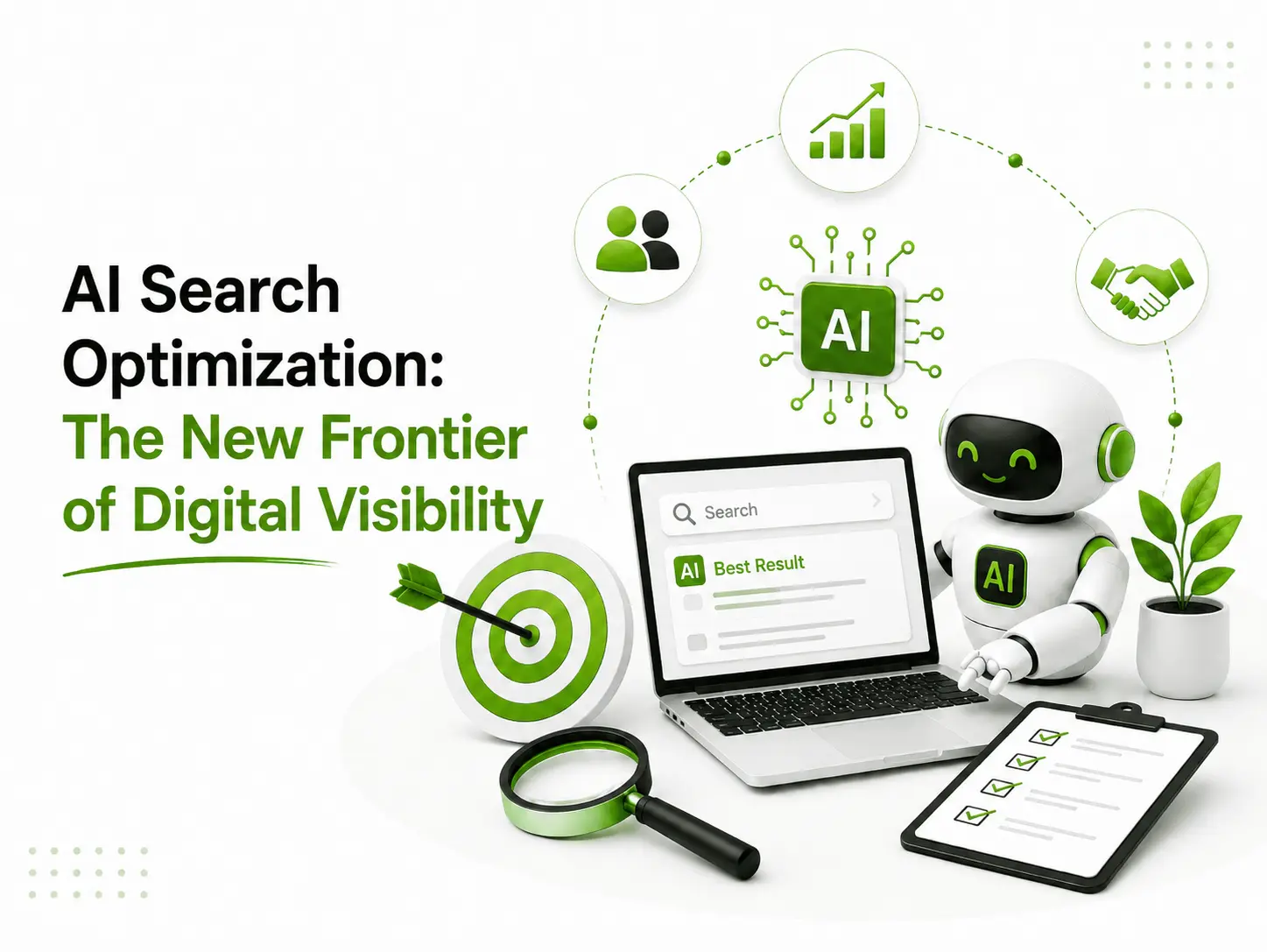
This is the new battleground for digital visibility. As AI-powered search tools like ChatGPT, Google Gemini, and Perplexity reshape how people find businesses, a growing number of forward-thinking companies are investing in ChatGPT Optimization Services to ensure their brand shows up where buying decisions are now being made.
At DigiTechzo, we’ve worked with businesses across industries to navigate this emerging landscape — and the results are hard to ignore. Brands that optimize for AI-generated answers are capturing high-intent leads before those leads ever land on a search results page.
⚡ Quick Answer-ChatGPT Optimization Services help businesses structure their content, brand signals, and online presence so AI models like ChatGPT and Gemini cite or recommend them in responses. It’s the next evolution of SEO — and early movers are already winning.
What Are ChatGPT Optimization Services?
ChatGPT Optimization Services (also referred to as Generative Engine Optimization or GEO) are a set of strategies designed to increase the likelihood that AI language models — including ChatGPT, Google Gemini, Claude, and Perplexity — will mention, recommend, or cite your business when users ask relevant questions.
Think of it as SEO, but instead of optimizing for a list of ten blue links, you’re optimizing to become part of a conversational AI response that a user trusts as a direct, authoritative answer.
Unlike traditional SEO, where ranking is determined by crawl signals and backlinks, AI answer optimization focuses on:
- How well your content answers specific questions
- How frequently your brand is mentioned across authoritative sources
- Whether your brand signals align with the topic you want to be known for
- The structure and accessibility of your content for AI parsing
The Rise of Zero-Click AI Queries
According to studies tracking user behavior on AI platforms, a significant share of queries on tools like ChatGPT never result in a traditional website visit. Users get their answer directly from the AI. This means if your brand isn’t in that answer, you’re effectively invisible — even if you rank #1 on Google for that keyword.
Why AI Answer Optimization Matters for Business
The shift toward AI-driven discovery isn’t a future trend — it’s happening right now. ChatGPT crossed 100 million users in just two months after launch, faster than any consumer application in history. As of 2024, millions of business and commercial queries are being processed daily by AI tools.
For businesses with commercial intent audiences, this matters enormously because:
- Buying intent is highest when users ask questions like ‘best CRM software for small business’ or ‘top accountants in Austin’ — exactly the queries AI tools now answer directly.
- AI answers carry implicit authority. When ChatGPT recommends a brand, users perceive it as a vetted, reliable suggestion — not an ad.
- First-mover advantage is real. The brands building their AI presence today are establishing authority that will be hard to displace.
The Commercial Intent Opportunity
Commercial intent queries — comparisons, ‘best of’ lists, service recommendations, and product evaluations — are exactly where AI tools shine. A user asking ChatGPT ‘Which digital marketing agency should I hire for e-commerce?’ is a warm lead. If your agency is cited in that response, you’ve captured attention at the highest point of the funnel, without paying for a click.
How ChatGPT Decides What to Recommend
This is where most businesses (and unfortunately, most agencies) are guessing. Understanding the mechanics behind AI recommendations is the foundation of any effective ChatGPT Optimization Service.
AI models like ChatGPT are trained on vast corpora of text from the web. Their responses are shaped by:
Training Data Frequency and Sentiment
If your brand is mentioned frequently across high-authority sources — news outlets, industry blogs, review platforms, forums — the model develops a positive association between your brand and the relevant topic. This isn’t magic. It’s pattern recognition at scale.
Source Authority and Citation Quality
AI models weight information from credible, well-linked domains more heavily. A mention of your brand in a Forbes article, an industry association’s directory, or a well-trafficked niche publication carries more weight than a blog with zero backlinks. This mirrors traditional SEO authority signals — but applied to what the AI has learned, not what it crawls in real-time (though tools like Bing Chat and Perplexity do use live search).
Structured, Answerable Content
AI models favor content that directly answers questions in clear, structured formats. Pages using FAQ schema, comparison tables, definition blocks, and step-by-step guides are far more likely to be drawn upon in AI responses. This is why content architecture is a critical component of ChatGPT Optimization Services.
Brand Entity Recognition
Large language models recognize ‘entities’ — distinct people, places, organizations, and concepts. The more clearly your brand is defined as an entity (with consistent NAP data, Wikipedia-style descriptions, structured data markup, and cross-platform mentions), the more likely it is to be surfaced as a specific recommendation.
Core Components of ChatGPT Optimization Services
A professional ChatGPT Optimization Service covers multiple interconnected pillars. Here’s what a comprehensive engagement looks like:
a) AI-Optimized Content Strategy
- Question-based content: Creating content that directly answers the specific questions your target audience asks AI tools.
- Answer-first formatting: Leading paragraphs with the core answer, followed by supporting detail.
- Semantic depth: Covering topics comprehensively so AI models recognize your content as a thorough source.
- FAQ and schema markup: Structuring content with FAQPage, HowTo, and Product schema for AI and featured snippet eligibility.
b) Brand Mention and Citation Building
- Getting your brand mentioned in relevant industry publications
- Building presence on authoritative review platforms (G2, Capterra, Clutch, Trustpilot)
- Forum and community engagement on Reddit, Quora, and niche forums
- Earning analyst mentions, award listings, and directory placements
c) Entity Optimization
- Consistent brand name, description, and categorization across all platforms
- Wikipedia and Wikidata presence (for established brands)
- Google Knowledge Panel optimization
- Structured data markup across your website
d) Prompt Testing and Gap Analysis
A key differentiator of serious ChatGPT Optimization Services is systematic testing. This involves:
- Running competitor and category queries across multiple AI platforms
- Identifying which brands are being recommended and why
- Mapping content and citation gaps your brand needs to fill
- Tracking changes in AI responses over time
e) Conversational Content Alignment
AI tools are used conversationally. Your content strategy needs to reflect natural language patterns — the way real customers phrase questions, not just how they type short search queries. This is often called ‘long-tail conversational keyword optimization’ and it’s distinct from traditional keyword research.
ChatGPT Optimization vs. Traditional SEO
Many businesses ask: do I need both? The short answer is yes — but the strategies complement each other in specific ways.
Where They Overlap
- High-quality, authoritative content benefits both
- Backlinks and brand mentions help both
- Technical site structure supports both
- E-E-A-T signals (Experience, Expertise, Authority, Trust) matter for both
Where They Differ
- Ranking mechanism: SEO uses algorithmic ranking signals. AI optimization relies on training data patterns and prompt-time retrieval.
- Visibility format: SEO drives clicks to your site. AI optimization gets your brand cited in a response the user reads without clicking.
- Measurement: SEO is measured by rankings and traffic. AI optimization is measured by brand citation frequency across AI tools.
- Keyword targeting: SEO focuses on search queries. AI optimization focuses on question-answer pairs and conversational intent.
Bottom line: businesses that treat these as separate disciplines — and invest in both — will significantly outperform those who do one or neither.
Industry Use Cases and Real-World Examples
SaaS and B2B Technology
A project management SaaS company optimized their content to answer questions like ‘What’s the best project management tool for remote teams?’ across every AI platform. Within six months, their brand appeared in ChatGPT responses for this query type in 3 out of 5 tests — while their competitor, who had more Google traffic, was invisible in AI answers. The result: a measurable increase in branded search and inbound demo requests from users who first encountered them via ChatGPT.
Professional Services
Law firms, accounting firms, and consulting agencies operate in high-trust, high-value categories. AI tools are increasingly used to find local or specialized service providers. Firms that have built citation authority through bar association directories, legal publication bylines, and structured local content are appearing in AI-generated recommendations for queries like ‘best immigration attorney in [city]’ — high-intent leads with significant lifetime value.
E-Commerce and Consumer Brands
Product comparison queries are among the most common commercial intents on AI tools. A consumer electronics brand that structured their product pages with detailed specification tables, user-focused FAQs, and broad third-party review coverage started appearing in ChatGPT responses for ‘best wireless earbuds under $100’ — a category query that previously only returned Amazon and review aggregator links.
Common Mistakes Businesses Make
Mistake 1: Treating AI Optimization Like a Quick Win
AI model training and response patterns don’t change overnight. Building genuine brand authority in AI systems is a sustained effort — not a one-time campaign. Businesses that expect rapid results end up abandoning the strategy before it compounds.
Mistake 2: Ignoring Third-Party Brand Mentions
Many brands focus entirely on their own website content and neglect the external ecosystem. But AI models learn about your brand from what others say about you, not just what you say about yourself. A press release on your own blog does almost nothing. A mention in an industry publication does significantly more.
Mistake 3: Keyword-Stuffing Instead of Question-Answering
Traditional SEO keyword density tactics actively harm AI optimization. AI models look for genuine, direct answers to questions — not pages where a keyword appears 15 times. Content needs to be written for the human (and the AI evaluating helpfulness), not the crawler.
Mistake 4: Neglecting Review Platforms
AI models draw heavily from aggregated review platforms when making recommendations, especially for local and service businesses. Companies with thin or absent review profiles are frequently omitted from AI-generated recommendations, even if their website SEO is strong.
Mistake 5: Not Measuring AI Visibility at All
You cannot optimize what you don’t measure. Many businesses don’t have a baseline for how often they appear in AI answers — which means they have no way to know if their efforts are working. Establishing regular prompt testing and AI citation tracking is a prerequisite, not an afterthought.
Expert Tips to Rank in AI Answers
Tip 1: Build ‘Answer Pages’ Specifically for AI Queries
Create dedicated content pages that directly answer the top 20–30 questions your potential customers ask ChatGPT. Format each with a direct opening answer (2–3 sentences), supporting detail, and an FAQ section. This structure dramatically increases the likelihood your content becomes a source.
Tip 2: Pursue Strategic Co-Citations
When authoritative sources mention you alongside established brands in your category, AI models group you with that category. Getting featured in ‘Top 10’ lists, industry comparisons, and roundup articles from reputable sites is one of the most powerful AI visibility tactics available.
Tip 3: Optimize for Multiple AI Platforms Simultaneously
ChatGPT, Google Gemini, Perplexity, Claude, and Microsoft Copilot all have different data sources and retrieval mechanisms. A strategy that only targets one platform leaves significant visibility on the table. Comprehensive ChatGPT Optimization Services account for the full AI answer ecosystem.
Tip 4: Use Structured Data at Scale
Implement FAQPage, HowTo, Product, LocalBusiness, and Organization schema markup across your site. This doesn’t just help with featured snippets — it helps AI models understand your content structure and entity relationships, making it easier to surface you accurately.
Tip 5: Build Topical Authority, Not Just Page Authority
AI models favor sources that demonstrate deep, consistent expertise in a topic area. A website with 200 pages about one subject will outperform a website with one page about 200 subjects in AI contexts. Develop comprehensive content clusters around the core topics you want to be recommended for.
Frequently Asked Questions
What exactly are ChatGPT Optimization Services?
ChatGPT Optimization Services are professional strategies designed to increase how often and how positively AI tools like ChatGPT, Gemini, and Perplexity mention or recommend your brand. They combine content strategy, brand authority building, structured data, and citation development to make your business a preferred source in AI-generated answers.
How long does it take to see results from ChatGPT optimization?
AI citation improvements typically emerge over 3–6 months of sustained effort. Changes to AI model training data are not instantaneous — but tools like Perplexity and Bing Chat, which use live search retrieval, can show visibility improvements faster (often within weeks) as your new content gets indexed and cited.
Is ChatGPT Optimization different from traditional SEO?
Yes, though they share foundations. Traditional SEO targets ranking in search engine results pages. ChatGPT optimization targets being mentioned or recommended within AI-generated conversational responses. Both require strong content and authority signals — but AI optimization additionally requires brand entity development, question-answer content structures, and citation building across third-party sources.
Can small businesses benefit from ChatGPT Optimization Services?
Absolutely. Small businesses operating in niche or local categories can achieve significant AI visibility with targeted effort — often more efficiently than trying to compete in broad Google SERPs. A local law firm, boutique consultant, or specialty product brand can become a consistent AI recommendation in their category through focused optimization.
How do I know if my brand is being mentioned in AI answers?
The most practical method is systematic manual testing — running relevant category and comparison queries across ChatGPT, Gemini, Perplexity, and other platforms regularly. More advanced approaches include using AI monitoring tools that track brand mentions across AI responses. Establishing this baseline is one of the first steps in any professional ChatGPT Optimization Service engagement.
Conclusion: The Time to Act is Now
AI search is not a future disruption — it is the present reality reshaping how businesses get discovered, evaluated, and chosen. Every day that your brand is absent from AI-generated answers is a day your competitors are building the associations and authority that will define AI visibility for years to come.
ChatGPT Optimization Services represent one of the highest-ROI investments available to commercial businesses right now, precisely because the space is not yet saturated. The brands that move strategically today will establish durable AI authority that latecomers will struggle to displace.
At DigiTechzo, we specialize in helping businesses build the content infrastructure, brand authority, and citation presence needed to become consistent AI recommendations — not just occasional mentions. Our approach is data-driven, platform-agnostic, and calibrated for commercial intent outcomes.