
At some point, most founders and marketing leaders hit the same wall: the product is solid, the team is capable, but growth still feels like guesswork. You don’t necessarily need a full agency retainer or a six-figure consulting engagement — you need one sharp, experienced person who’s solved this exact problem before and can tell you, specifically, what’s broken and what to do about it.
That’s the real job of a GTM strategy consultant — an individual expert who brings pattern-recognition from dozens of go-to-market motions across different companies, and applies it directly to yours. Unlike a large firm engagement, hiring a GTM strategy consultant is usually faster to start, more direct in communication, and more focused on solving one specific problem rather than running a broad multi-workstream project.
At Digitechzo, our team has worked as embedded and fractional GTM strategists for founders who needed exactly this — someone to sit inside their business for a defined period, diagnose what wasn’t working in their positioning, pricing, or channel strategy, and hand back a plan the internal team could actually run with. This guide breaks down what a GTM strategy consultant does differently from a firm, how engagements are typically structured, and exactly how to evaluate one before you hire.
Quick Answer
A GTM strategy consultant is an individual expert (often engaged fractionally or project-based) who diagnoses and redesigns a company’s go-to-market approach — covering positioning, ICP, pricing, and channel strategy — without the overhead of a full agency or consulting firm engagement. The best consultants combine hands-on operating experience with a structured diagnostic process, and are evaluated on the clarity of their recommendations and their track record of real business outcomes, not credentials alone.
What Does a GTM Strategy Consultant Do?
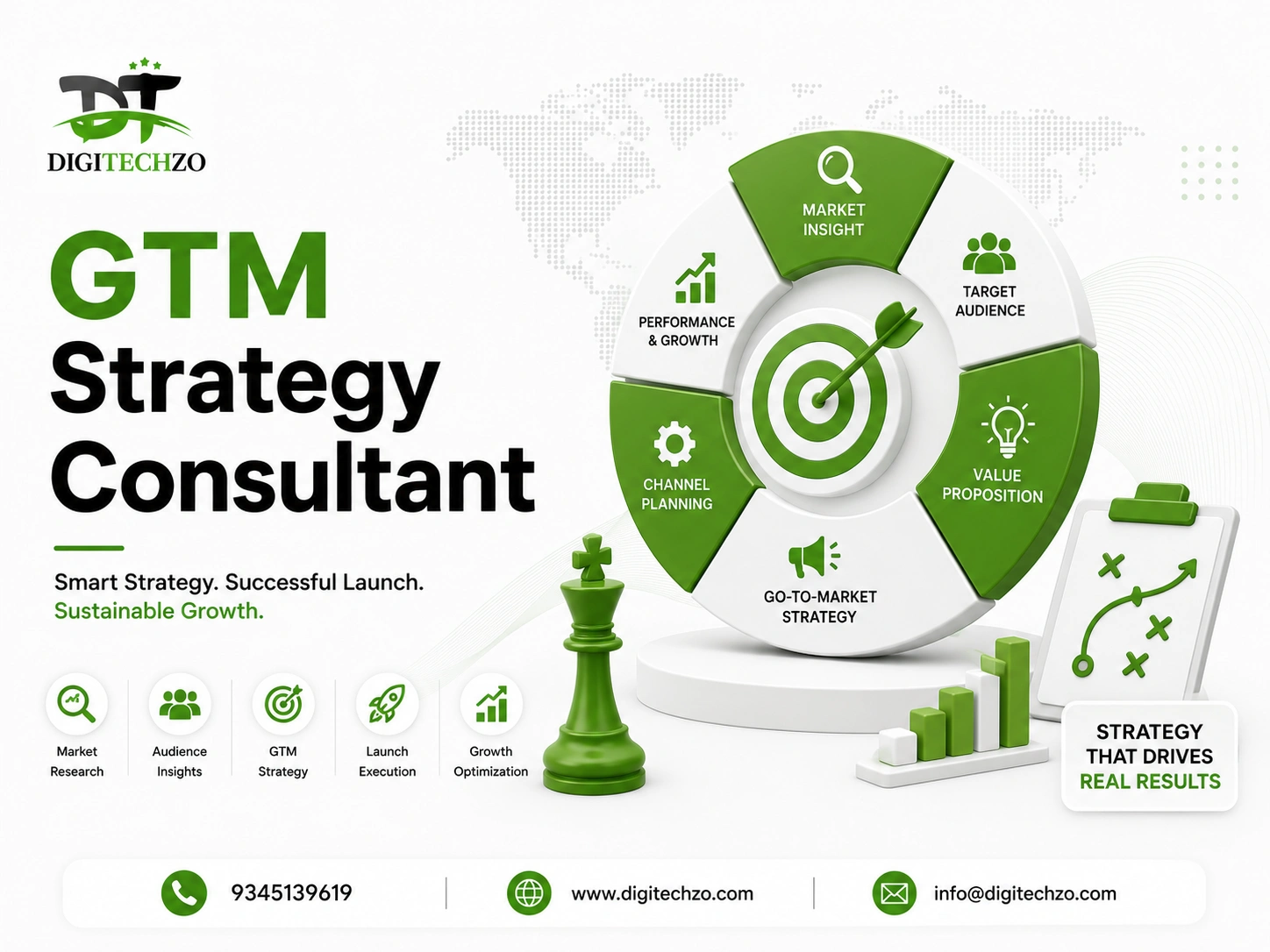
A GTM strategy consultant is brought in to diagnose why a company’s go-to-market motion isn’t producing the results it should, and to design a specific, actionable path to fix it. This usually covers:
- Ideal Customer Profile (ICP) validation — checking whether the company is actually targeting the segment most likely to buy, renew, and refer.
- Positioning and messaging diagnosis — identifying where the current pitch fails to differentiate or resonate with the real buying trigger.
- Pricing and packaging review — assessing whether pricing structure is helping or quietly working against conversion and expansion revenue.
- Channel strategy assessment — determining whether the company is over-invested in a channel that doesn’t match its buyer’s actual behavior.
The key difference from a larger firm: a GTM strategy consultant is usually one experienced individual (sometimes with a small supporting team), which means faster decision-making, more direct access to the person actually doing the thinking, and a sharper focus on strategic diagnosis rather than large-scale execution.
GTM Strategy Consultant vs. Agency vs. Consulting Firm
It’s worth being precise about this, because the three get confused constantly:
- A GTM strategy consultant is typically an individual expert engaged directly for diagnosis and strategic recommendations, often on a fractional or project basis. Communication is direct, engagement is lean, and the focus is strategic clarity.
- A GTM consulting firm brings a team and a more structured, multi-phase methodology, usually suited to larger organizations needing broader organizational alignment alongside the strategy.
- A go-to-market agency focuses on execution — building the campaigns, content, and sales enablement assets that bring a strategy (whether from a consultant, firm, or internal team) to life.
A useful way to think about it: the consultant tells you precisely what’s broken and what to do next; the agency builds and runs the machinery to do it. Many companies benefit from both, in sequence — a consultant for clarity first, then an execution partner (agency or internal team) to run with it.
How a GTM Strategy Consultant Engagement Typically Works
Step 1: Discovery & Diagnostic Interviews
The consultant reviews existing performance data and interviews key stakeholders — sales, marketing, customer success, and often a handful of actual customers — to separate real signal from internal assumption.
Step 2: Strategic Diagnosis
This is where the consultant identifies the specific root cause of underperformance: is it the ICP, the pricing, the messaging, or the channel mix? Most struggling GTM motions have one or two dominant root causes, not five equally weighted problems.
Step 3: Strategy & Roadmap Delivery
The consultant delivers a specific, prioritized roadmap — not a generic framework, but recommendations tied directly to the diagnostic findings, with a clear sequence for what to fix first.
Step 4: Advisory Support During Rollout
Many engagements include a defined period of ongoing advisory support as the internal team begins implementing the recommendations, allowing for course correction based on early results.
When Your Business Actually Needs a GTM Strategy Consultant
- You need an outside, unbiased read on why growth has stalled — internal teams often can’t see their own blind spots, especially around positioning.
- You’re preparing for a fundraise or board review and need a credible, well-reasoned GTM narrative backed by real diagnostic work.
- You don’t need (or can’t yet justify) a full-time VP of Marketing or Growth, but you need senior-level strategic thinking now.
- You’re about to make a major pricing or packaging change and want an experienced outside perspective before committing.
- Your team is too close to the problem to objectively evaluate whether the current GTM motion is actually working or just familiar.
Engagement Models: Pros & Cons
| Model | Pros | Cons |
|---|---|---|
| Project-based (fixed scope, e.g., 4-8 weeks) | Clear deliverable and cost; good for a specific diagnostic need | Limited ongoing support once the project ends |
| Fractional / retainer-based | Ongoing strategic access; adapts as the business evolves | Requires clear scope boundaries to avoid ambiguity |
| One-off advisory / audit | Low cost, fast turnaround | Less depth than a full diagnostic engagement |
Most companies get the best value from a project-based diagnostic engagement first, converting to a lighter fractional retainer only if ongoing strategic input is genuinely needed.
How to Evaluate and Choose a GTM Strategy Consultant
Ask for Specific, Verifiable Outcomes
“I helped increase pipeline” is vague. Look for consultants who can describe the specific diagnostic finding, the recommendation made, and the measurable result that followed.
Check for Operating Experience, Not Just Advisory Experience
Consultants who have actually operated inside a GTM function (not just advised from the outside) tend to give more practical, implementable recommendations.
Confirm Industry and Business-Model Relevance
A consultant deeply experienced in enterprise B2B SaaS may not transfer well to a marketplace or DTC business model. Ask directly about relevant pattern-matching experience.
Evaluate Their Diagnostic Process
A credible consultant should be able to describe their discovery process clearly before you sign anything — vague answers here are a warning sign of a generic, templated engagement.
Common Mistakes When Hiring a GTM Strategy Consultant
- Hiring based on credentials alone — a big-name previous employer doesn’t guarantee relevant, hands-on GTM diagnostic skill.
- Skipping the discovery phase to save time — recommendations built without real customer and data input tend to be generic and often wrong.
- Expecting execution from a strategy-focused engagement — most consultants aren’t set up to build and run full campaigns; that’s an agency’s job.
- Not aligning internal stakeholders before the engagement starts — if sales and marketing leadership disagree going in, the consultant’s diagnosis will face internal resistance regardless of quality.
- Treating the roadmap as static — markets shift, and a plan that was right at delivery may need adjusting a few months into rollout.
- Choosing the cheapest option without checking relevant experience — a mismatched consultant costs more in wasted time than a properly vetted, slightly pricier one.
Expert Tips for Getting the Most Out of the Engagement
- Come prepared with your existing data — win/loss data, churn reasons, and sales call recordings dramatically sharpen the diagnostic phase.
- Involve your sales leader directly in discovery, not just marketing — GTM problems are frequently visible in sales conversations before they show up in marketing metrics.
- Ask for the roadmap in prioritized order, not just a list of recommendations — knowing what to fix first prevents diluted effort across too many changes at once.
- Build in a short advisory check-in a few weeks after rollout begins — early implementation issues are far cheaper to correct than ones caught months later.
- Pair the strategic diagnosis with an execution partner who can build the systems to run it — this is where a firm like Digitechzo often steps in after the strategy phase, turning the roadmap into actual campaigns, automation, and growth infrastructure.
FAQs
What is a GTM strategy consultant?
A GTM strategy consultant is an individual expert who diagnoses issues in a company’s go-to-market approach — covering ICP, positioning, pricing, and channel strategy — and delivers a specific, prioritized roadmap to fix them, typically on a project or fractional basis.
How is a GTM strategy consultant different from a fractional CMO?
A GTM strategy consultant typically focuses on a defined diagnostic engagement with a clear roadmap deliverable, while a fractional CMO takes on broader, ongoing leadership responsibility across the full marketing function, often including team management.
How much does a GTM strategy consultant typically charge?
Rates vary significantly based on experience level and engagement scope — a focused diagnostic project is generally less expensive than an ongoing fractional retainer. Most credible consultants provide a scoped proposal after an initial discovery call rather than a flat public rate.
How long does a typical engagement take?
Most diagnostic-focused engagements run 4 to 8 weeks, though this can extend if the consultant is also providing advisory support through the early implementation phase.
Do I need a GTM strategy consultant if I already have a marketing team?
Yes, often — an outside consultant provides an objective diagnostic view that internal teams frequently can’t provide themselves, especially when the team is too close to existing assumptions about positioning or channel strategy.
Conclusion
A GTM strategy consultant isn’t a replacement for your team — it’s a way to get sharp, outside clarity on exactly what’s broken before you spend another quarter guessing. The right consultant brings real operating pattern-recognition, a structured diagnostic process, and a roadmap your team can actually execute, not just another framework to file away.
If you’re evaluating a GTM strategy consultant because growth has stalled and you need a clear, unbiased read on what to fix first, Digitechzo offers exactly this kind of strategic diagnostic work — and, when needed, the execution and automation systems to turn the resulting roadmap into real pipeline. Reach out for a GTM strategy audit tailored to your business.
About The Author