

Business Process Automation Services Australia
If your team is spending hours every week on manual data entry, chasing approvals, or copying information between systems, you are not alone — and you are leaving significant money on the table. Business process automation services in Australia have become one of the fastest-growing technology investments for companies of all sizes, from nimble start-ups in Brisbane to mid-market manufacturers in Melbourne and enterprise firms in Sydney.
At DigiTechzo, we work with Australian businesses every day to design, deploy, and optimise automation solutions that cut costs, remove bottlenecks, and free your people to focus on work that actually moves the needle. This guide distills everything we have learned — and everything you need to know — to make a confident decision about business process automation.
Quick Answer
“Business process automation (BPA) uses software to handle repetitive, rule-based tasks — replacing manual effort with reliable, scalable workflows. Australian businesses investing in BPA typically see ROI within 6–18 months, productivity gains of 20–40 %, and dramatic reductions in human error. The right BPA provider will assess your existing processes, recommend the best tools (RPA, AI workflow automation, iPaaS, or low-code platforms), and manage ongoing optimisation.”
What Is Business Process Automation?

Business process automation (BPA) is the use of technology to execute recurring tasks or processes in a business where manual effort can be replaced. It goes beyond basic task automation (like scheduling emails) to orchestrate entire end-to-end workflows across multiple systems, teams, and data sources.
A simple definition worth knowing: BPA is not about replacing your workforce. It is about freeing your workforce from work that does not require human judgement — so they can focus on work that does.
BPA vs RPA vs Workflow Automation: What Is the Difference?
| Term | What It Means |
| Business Process Automation (BPA) | Broad term — automating entire business processes end-to-end |
| Robotic Process Automation (RPA) | Software ‘bots’ that mimic human actions on-screen (clicks, keystrokes) |
| Workflow Automation | Routing tasks, approvals, and notifications between people and systems |
| Intelligent Process Automation (IPA) | RPA + AI/ML — handles unstructured data and decision logic |
| iPaaS (Integration Platform as a Service) | Cloud middleware that connects disparate apps and automates data flow |
Most modern business process automation services in Australia blend several of these approaches, choosing the right tool based on the complexity and structure of each process.
Why Australian Businesses Are Automating Now
Australia faces a unique combination of pressures that make automation not just attractive but urgent:
- Tight labour market: Australia’s unemployment rate has remained historically low, making skilled staff expensive and hard to retain. Automation removes the dependency on headcount for repetitive tasks.
- Rising wage costs: The Fair Work Commission’s annual minimum wage increases have pushed up operational costs across hospitality, retail, logistics, and professional services.
- Digital-first competitors: Younger competitors — many operating with lean, highly automated back-offices — are undercutting established players on speed and price.
- Cloud infrastructure maturity: Australian businesses now have access to enterprise-grade cloud platforms (AWS Sydney, Azure Australia East, Google Cloud Sydney) that make deploying automation faster and cheaper than ever.
- Post-pandemic efficiency push: The pandemic forced rapid digitisation. Many boards are now mandating operational efficiency targets that manual processes simply cannot meet.
According to Deloitte’s 2023 Global RPA Survey, 53 % of organisations that have already started automation journeys plan to continue investing — and Australian businesses are no exception, with automation spend in the APAC region growing at over 20 % year-on-year.
Core Types of Business Process Automation Services
Robotic Process Automation (RPA)
RPA tools like UiPath, Automation Anywhere, and Microsoft Power Automate Desktop deploy software robots that interact with applications exactly as a human would — reading screens, entering data, copying information between systems. RPA is ideal when you cannot change the underlying applications (e.g., legacy ERP or government portals).
Best for: Invoice processing, payroll data entry, regulatory reporting, legacy system integration.
Workflow and BPM Automation
Business Process Management (BPM) platforms like Nintex, Appian, and Microsoft Power Automate orchestrate multi-step workflows, route tasks to the right people, trigger notifications, and enforce SLAs. Unlike RPA, BPM sits at the process design level.
Best for: Employee onboarding, contract approvals, procurement workflows, compliance checklists.
AI-Powered Intelligent Automation
Combining machine learning with automation, intelligent process automation (IPA) can handle unstructured data — like reading a PDF invoice, extracting key fields, and coding the transaction to the right GL account — without a human touching it.
Best for: Accounts payable, document classification, customer service triage, demand forecasting.
iPaaS and API Integration
Platforms like MuleSoft, Boomi, Azure Logic Apps, and Make (formerly Integromat) connect cloud applications via APIs and automate data synchronisation. If your business runs on Salesforce, Xero, HubSpot, and a custom ERP, iPaaS is the glue.
Best for: CRM-to-ERP sync, e-commerce order management, marketing automation data feeds, reporting consolidation.
Low-Code / No-Code Automation Platforms
Microsoft Power Platform, Zoho Creator, and OutSystems allow business analysts (not just developers) to build automated workflows and apps. This democratises automation and dramatically reduces time-to-value.
Best for: Businesses wanting faster internal rollouts, departmental automation, form-based processes.
Which Processes Should You Automate First?
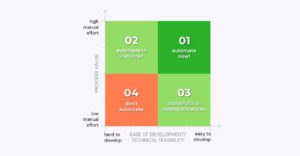
Not every process is a good automation candidate. Use this prioritisation framework — the same one DigiTechzo consultants use with Australian clients — to identify quick wins versus strategic investments.
| The STAR Framework for Automation Prioritisation:
S — Scale: How often is the task performed? (Daily/hourly processes generate the highest ROI) T — Time per instance: How long does a human spend on each occurrence? A — Accuracy sensitivity: What is the cost of an error? (Finance & compliance processes score high) R — Rules-based logic: Can the decision logic be clearly defined? (Ambiguous judgement-heavy tasks are harder to automate) |
High-Priority Automation Candidates
- Accounts payable and receivable processing
- Employee onboarding and offboarding workflows
- Purchase order creation and approval routing
- Payroll data validation and timesheet processing
- Customer order fulfilment and shipping notifications
- Compliance reporting and audit trail generation
- IT helpdesk ticket triage and resolution workflows
- CRM data hygiene and lead routing
Processes to Approach Carefully
- Complex customer complaint handling (requires emotional intelligence)
- Creative and strategic decision-making
- Highly variable processes with frequent rule changes
- Processes requiring significant third-party system access without APIs
Business Process Automation Services in Australia: What to Look For
Selecting the right business process automation partner in Australia is as important as selecting the right technology. Here is what separates genuine specialists from generalist IT vendors:
Process Discovery Capability
The best providers do not just implement tools — they start with a structured process discovery phase. This involves process mining (using tools like Celonis or UiPath Process Mining), stakeholder interviews, and current-state mapping to identify the highest-value automation opportunities before writing a single line of code.
Australian Regulatory Knowledge
Australian businesses operate under specific legal and compliance frameworks — the Privacy Act 1988 (with the Australian Privacy Principles), Fair Work Act obligations, ATO reporting requirements, and industry-specific regulations like APRA CPS 234 for financial services. Your automation partner must understand these constraints and build compliant workflows from day one.
Multi-Tool Expertise
No single automation platform suits every use case. A credible provider will have certified expertise across multiple platforms (UiPath, Power Automate, MuleSoft, Nintex, etc.) and will recommend the best tool for your specific situation — not the one they have a commercial incentive to sell.
Change Management and Enablement
Technology is only half the equation. Successful automation programs require change management — helping employees understand what is changing, why, and how their roles evolve. Look for providers who include training, communication planning, and a Centre of Excellence (CoE) setup as part of their engagement model.
Ongoing Managed Services
Automation is not a set-and-forget project. Bots break when underlying systems change, processes evolve, and business rules update. The best Australian BPA providers offer ongoing managed services — monitoring, maintenance, optimisation, and bot health reporting — as part of a long-term partnership.
Real-World Use Cases Across Australian Industries
Financial Services & Accounting
A Sydney-based accounting firm reduced month-end close time by 60 % by automating bank reconciliation, intercompany eliminations, and management report generation using a combination of RPA and Power Automate. The team now focuses on analysis and advisory work — not data manipulation.
Healthcare & Aged Care
An aged care provider in Victoria automated their NDIS claim submission process, cutting processing time per claim from 45 minutes to under 3 minutes and reducing rejection rates by 38 % through built-in validation rules. Staff now handle more residents with greater attention to care quality.
Logistics & Supply Chain
A national freight company automated their freight quoting, booking confirmation, and exception management workflows. Orders that previously required 4 manual touchpoints now flow end-to-end with zero human intervention for standard shipments — handling over 2,000 bookings per day automatically.
Retail & E-Commerce
A multi-channel retailer with stores across Australia automated their inventory replenishment triggers, supplier purchase orders, and fulfilment routing between stores and distribution centres. Stock-out events dropped by 28 % within the first quarter.
Professional Services
A national law firm automated their new client onboarding — conflict checks, engagement letter generation, matter setup in their practice management system, and client portal provisioning. What took 3.5 hours of paralegal time now completes in under 8 minutes.
How to Calculate ROI Before You Invest
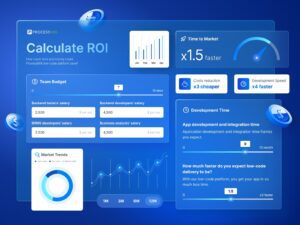
Before committing budget to business process automation, build a simple ROI model. Here is the formula DigiTechzo recommends:
| Annual Savings = (Hours saved per year × Fully-loaded hourly cost) + (Error reduction savings) + (Throughput gains)
Net ROI = (Annual Savings − Annual Automation Cost) ÷ Annual Automation Cost × 100 Payback Period = Total Implementation Cost ÷ Monthly Savings |
Sample ROI Calculation
| Variable | Value |
| Process: Invoice Processing | |
| Current volume | 800 invoices/month |
| Current time per invoice | 12 minutes (manual) |
| Monthly hours spent | 160 hours |
| Fully-loaded cost (AP officer @ $45/hr) | $7,200/month |
| Post-automation time per invoice | 1.5 minutes (exception review only) |
| Monthly hours post-automation | 20 hours |
| Monthly saving | $6,300 |
| Annual saving | $75,600 |
| Implementation cost (one-off) | $28,000 |
| Annual licensing + support | $9,600 |
| Payback period | ~5 months |
This does not account for secondary benefits: improved cash flow from faster payment processing, better supplier relationships, and the ability to scale invoice volume without adding headcount.
Common Mistakes Australian Businesses Make with Automation
Mistake 1: Automating a Broken Process
Automating a flawed process does not fix it — it makes the errors faster and more consistent. Before automating, map the current process, identify waste, and redesign it. Then automate the improved version.
Mistake 2: Choosing Technology Before Defining the Problem
Many businesses buy an RPA licence because a vendor convinced them it was right, then struggle to find use cases that justify the investment. Always start with process discovery, then select the technology that fits.
Mistake 3: Ignoring Change Management
Automation that employees do not trust or understand will be worked around. Staff will revert to manual processes ‘just to be sure’. Invest in communication, training, and involving frontline teams in the design phase.
Mistake 4: No Governance Model
Without a Centre of Excellence or at minimum a named automation owner, organisations end up with a scattered collection of bots built by different teams using different tools, with no documentation, no monitoring, and no one accountable when something breaks.
Mistake 5: Underestimating Maintenance
Bots are not maintenance-free. When a vendor updates a UI, when a system API changes, or when a business rule is modified, bots break. Budget for ongoing maintenance — typically 15–25 % of the initial build cost per year.
Mistake 6: Picking the Cheapest Provider
Low-cost offshore providers may deliver the initial build cheaply but often lack the Australian regulatory knowledge, the ongoing support capability, and the process expertise to deliver real business value. The total cost of ownership is what matters, not the day rate.
Expert Tips from BPA Practitioners
- Start with a 90-day proof of concept on a single high-volume process. Prove the ROI, build internal confidence, then scale. Avoid trying to automate everything at once.
- Involve your IT security team from day one. Automation touches sensitive systems and data. Access controls, audit trails, and credential management must be designed in — not bolted on.
- Build your automation on APIs wherever possible, not UI-based RPA. API integrations are far more stable and resilient to system updates.
- Document your bots like production code. Every bot should have a process definition document (PDD), an object design document (ODD), and a runbook. This protects you when staff turnover or vendors change.
- Measure what matters: track exception rates, processing times, error rates, and SLA adherence — not just ‘hours saved’. Business leaders need to see operational KPIs improving.
- Plan for continuous improvement. Your first iteration of an automated process will not be perfect. Build in quarterly reviews to optimise logic, handle edge cases, and incorporate user feedback.
Frequently Asked Questions
What is the average cost of business process automation services in Australia?
Costs vary significantly by scope and complexity. A single RPA bot for a well-defined process typically costs between $15,000 and $40,000 to design, build, and test, with annual licensing and support running $8,000–$15,000. Enterprise-wide automation programs can range from $150,000 to several million dollars over multi-year engagements. Most providers offer a free process assessment to provide a tailored estimate.
How long does it take to implement business process automation?
A focused RPA proof-of-concept on a single process can go live in 6–10 weeks. More complex integrations or multi-process programs typically take 3–6 months for the initial phase. The key variables are process complexity, the number of systems involved, availability of IT resources, and the quality of the process documentation at the start.
Is business process automation suitable for small businesses in Australia?
Yes — modern low-code platforms like Microsoft Power Automate and Zapier have made automation accessible to businesses with as few as 10–20 staff. For small businesses, the most common starting points are accounts payable processing, customer communication workflows, and CRM data management. DigiTechzo works with businesses of all sizes and can tailor solutions to match your budget and complexity.
What is the difference between RPA and AI automation?
RPA automates structured, rule-based tasks — it follows precise instructions and handles data that is already in a defined format (like a spreadsheet or a form). AI automation (intelligent process automation) adds machine learning and natural language processing, enabling it to handle unstructured data like emails, scanned documents, and voice inputs. Most modern programs use a blend of both.
How do I ensure data security with business process automation?
Reputable BPA providers build security into the automation architecture from the outset — using role-based access controls, encrypted credential vaults (not hard-coded passwords), detailed audit logging, and compliance with the Australian Privacy Act. Ask your provider specifically about their approach to the Australian Privacy Principles, their data residency policies, and how they handle sensitive PII within automated workflows.
Conclusion: The Time to Automate Is Now
Business process automation is no longer an optional efficiency play for large enterprises. It is a competitive necessity for any Australian business that wants to scale without proportionally scaling costs, deliver consistent service quality, and free its people to focus on strategic, high-value work.
The companies winning in Australia right now are not the ones with the most staff — they are the ones that have built intelligent, automated operations that let their teams do more with less. Whether you are a 20-person professional services firm or a 500-person manufacturer, there is an automation opportunity in your business that is costing you more every day it goes unaddressed.
| Ready to explore business process automation for your business?
DigiTechzo offers a free, no-obligation Process Automation Assessment for Australian businesses. In a 60-minute session, our consultants will map your highest-impact automation opportunities, estimate potential ROI, and recommend the right technology approach for your specific situation. Visit www.digitechzo.com.au or contact our team to book your assessment today. |